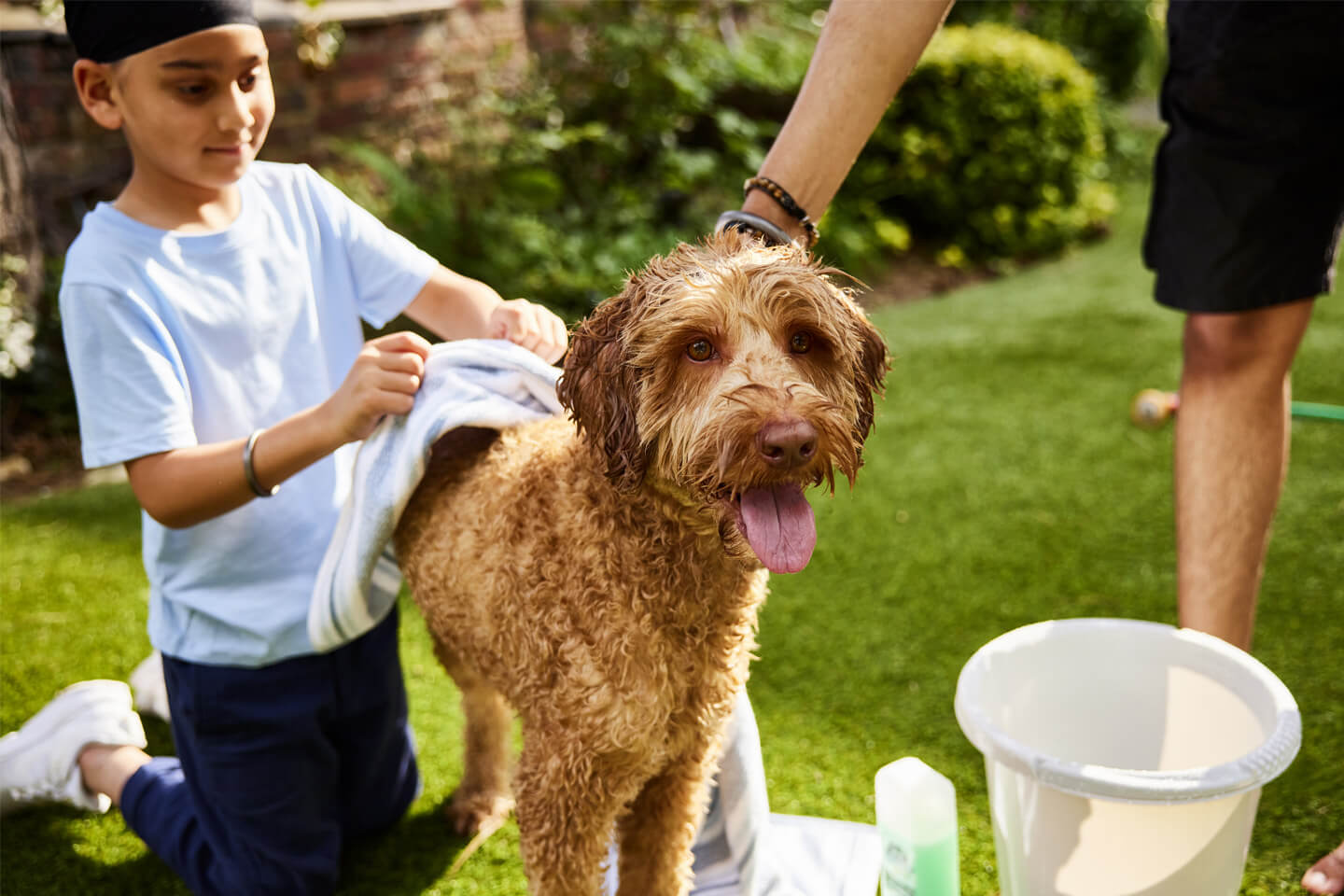
Bathing your dog at home can be a rewarding experience that strengthens the bond between you and your furry friend, while also keeping them clean and healthy. However, it’s not always as simple as turning on the faucet and grabbing some shampoo—there’s a technique to making bath time comfortable and effective for both you and your pet. From choosing the right products to managing nervous pups, this guide will walk you through everything you need to know to turn bath time into a stress-free and enjoyable routine. Whether you’re a first-time dog owner or just looking for tips to streamline the process, we’ve got you covered.
There are many reasons for bathing a dog: getting muddy on a walk, rolling in something horrible, smelling ‘doggy’ or to treat a skin condition. Some dogs love baths, others really hate them. The general rule is bath them when they need it but not if they don’t. Dogs' coats don’t need to be washed as often as our own hair. They have sensitive skin and unless they get dirty or smelly it best to leave the natural oils within the coat. Bathing too often removes these and can result in dry irritated skin. Bathing can also reduce the effectiveness of spot-on flea prevention. Our Pets Grooming colleagues will be happy to discuss the right bathing regimen for your dog if you would like further guidance.
A dog's coat has natural oils to protect it from drying out and for waterproofing the fur. Frequent bathing can remove these oils and dry the coat. A dog’s skin can be sensitive and removing its surface oily layer with a shampoo can leave the skin dry and inflamed.
If your dog has rolled in something smelly over their neck and shoulders, then a spot-wash may be enough to clean that area without having to fully bathe the dog.
But, if your dog is very dirty, smelly or has a skin condition that has a shampoo as part of its treatment plan, then a full bath could be indicated. If you notice your dog has an unusual or persistent odour discuss this with your vet as it may be a sign of a medical condition.
Most short-coated, smooth-haired dogs will self-clean well and a good brush will get rid of dirt easily, so they need bathing less often. Longer coated dogs may need bathing more often to reduce the risk of matting, with more frequent brushing between baths.
Hairless breeds need a weekly wash and then moisturising as they lack the natural protective layer that the hair provides. Oily coated breeds may need bathing every few weeks depending upon their environment.
Generally speaking, as and when it is needed. A spot-wash will be enough in a lot of cases, but a full bath is needed if the dog is really dirty, has a strong odour or needs a therapeutic bath for skin problems. If you notice your dog has an unusual or persistent odour discuss this with your vet as it may be a sign of a medical condition.
Long coated and densely or curly coated dogs benefit from bathing every 4-6 weeks, to help reduce the risk of matting. Short coated dogs need bathing less frequently, every 3 months will keep odour levels down and keep the coat healthy without drying it out. Hairless breeds need bathing weekly, then moisturising.
Dogs with oily coats such as Cocker Spaniels and Bassett Hounds may need bathing more often, but working dogs or dogs that swim need fewer baths, so that they don’t lose the waterproofing oils on the fur.
If your dog is very dirty, has rolled in and is covered in something smelly, has a strong dog odour or has something on their coat that you do not want them to lick off, then a bath is indicated. Bathing the dog during shedding will also help remove the loose fur from the coat and keep the dog more comfortable. Brushing before bathing removes loose hair and the bathing process often helps further with this process.
If your dog has a skin condition, your vet may prescribe a shampoo as part of their treatment and will give instructions on when and how to use the shampoo.
If you notice your dog has an unusual or persistent odour discuss this with your vet as it may be a sign of a yeast or bacterial infection.
If you are unsure if your dog would benefit from a bath or not our Pets Grooming colleagues would be happy to advise you.
Pick a dog shampoo suitable for your pet. A wide range of shampoos are available for different skin and coat types. If your vet gives your dog a medicated shampoo for a skin condition, read and follow the instructions carefully.
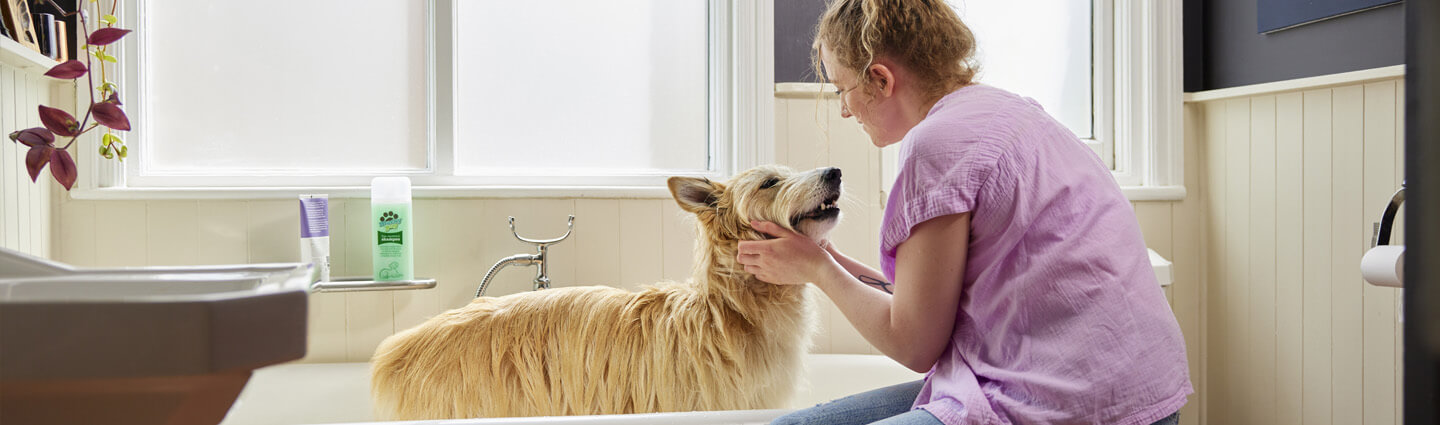
- At bathtime, get everything ready before you start. Make sure you have bucket of water and pouring jug, towels, shampoo and brushes all handy, a non-slip mat in the bath, a hair trap in the plughole and a collar on the dog before you start.
- Give your dog a thorough brush before bathing to remove as much loose hair as possible. It should reduce matting as they dry in long or fluffy coated dogs.
- Test the water is warm, not hot with your hand. You can either have water in a bowl or bucket (keeps it clean for rinsing), in the bath or sink itself (but difficult to rinse the dog off properly) or use a shower (keep checking the temperature of the water).
- Wet the dog all over, being careful not to get the eyes and ears too wet. The face and head can be wetted with a flannel or towel to make sure that water does not go down the ears.
- Once the dog is wet, massage in the shampoo – it can be easier to dilute the required amount of shampoo in a cup of water and then spread that over the dog. Rinse the dog with clean water and repeat if necessary, according to the shampoo instructions. The head and face can be gently shampooed and rinsed using a flannel, being careful of the eyes and ears. Make sure you rinse thoroughly to ensure all of the shampoo has been removed.
- The dog can then be taken out of the bath or sink, and towels used to press the water from the coat – don’t rub if the dog is long or fluffy coated as they will matt. Don’t leave the dog wet as they will chill.
- When your dog is dry brush them thoroughly again to remove knots from their coat.
Further advice can be found by talking to your vet or groomer.
You can still clean your dog without a bathtub. Small dogs can be bathed in the sink, larger dogs in the shower. It is generally easier to bathe large dogs in the shower, as you don’t have to lift them in.
Dry shampoos and cleansing foams are available that allow you to spot clean or clean the whole dog without using water or a bathtub. In the summer, bathing outside using a bucket of warm water and a sponge works well. Further advice can be found by talking to your vet or groomer.
Trying to bath a nervous dog can end up as a battle that will leave everyone stressed and exhausted. To avoid this, try and keep everything as calm as possible and have everything planned and ready before you get the dog.
The slippiness of the bath or shower tray will frighten a lot of dogs, so a non-slip mat can be used so they feel stable.
Having a second pair of hands is very useful. One person can wash, while the second holds the collar, chats and offers treats to the dog. A lick mat with dog safe peanut butter on it could also be stuck to the side of the bath to keep your dog occupied.
If the dog doesn’t like the spray from the shower or the feel of water from a jug being poured over, then use a facecloth or small towel to wet the dog.
For very nervous dogs, it may be useful breaking a bath into small steps and then doing one step at a time. First – the dog walks into the bathroom, then in the bath – no water. On another occasion, try adding a bit of water with a sponge and gradually build up from there over several weeks or even months. Each stage can be rewarded as the dog settles down, with lots of encouragement.
If your dog is still frightened and stressed, despite a gradual approach, speaking to a groomer may help - many dogs allow bathing at a groomers, but not at home. Groomers are used to working with nervous dogs and will take time to put them at ease for bathing.
However, some dogs will still be anxious, even at the groomers and in these cases a behaviourist can help to work out why your dog is reacting as they are and advise on the best treatment methods tailored to them.
The first step in flea control is to treat all pets in the household with an appropriate anti-parasiticide. Your vet can help you determine the safest and most effective products to use. If you have any other concerns about your pet's skin, you can also discuss those with your vet at the same time.
Bathing will not get rid of fleas and may wash off treatments that will. Getting rid of fleas can be difficult and take several weeks. It is recommended to use a preventative flea treatment throughout the year to stop the problem occurring if possible.
Once your pets have been treated it is also recommended to hoover thoroughly, wash bedding at high temperatures (if possible) and treat the environment using an appropriate household spray. Discuss preventative care with your vet to avoid the problem reoccurring.
If the flea treatment is in a tablet form, then it cannot be removed by frequent bathing. Topical (spot-on) treatments that are applied directly to the skin will be less effective if bathing is within 2-3 days of application or if the dog is frequently bathed while the product is on. For flea collars the length of effectiveness may also be reduced if the dog is bathed frequently.
The instructions for any flea product should be carefully read or checked with your vet practice to ensure that you are buying the correct product for your dog. Spot on treatments should not be applied within 2-3 days of bathing because of the environmental risk of contamination.