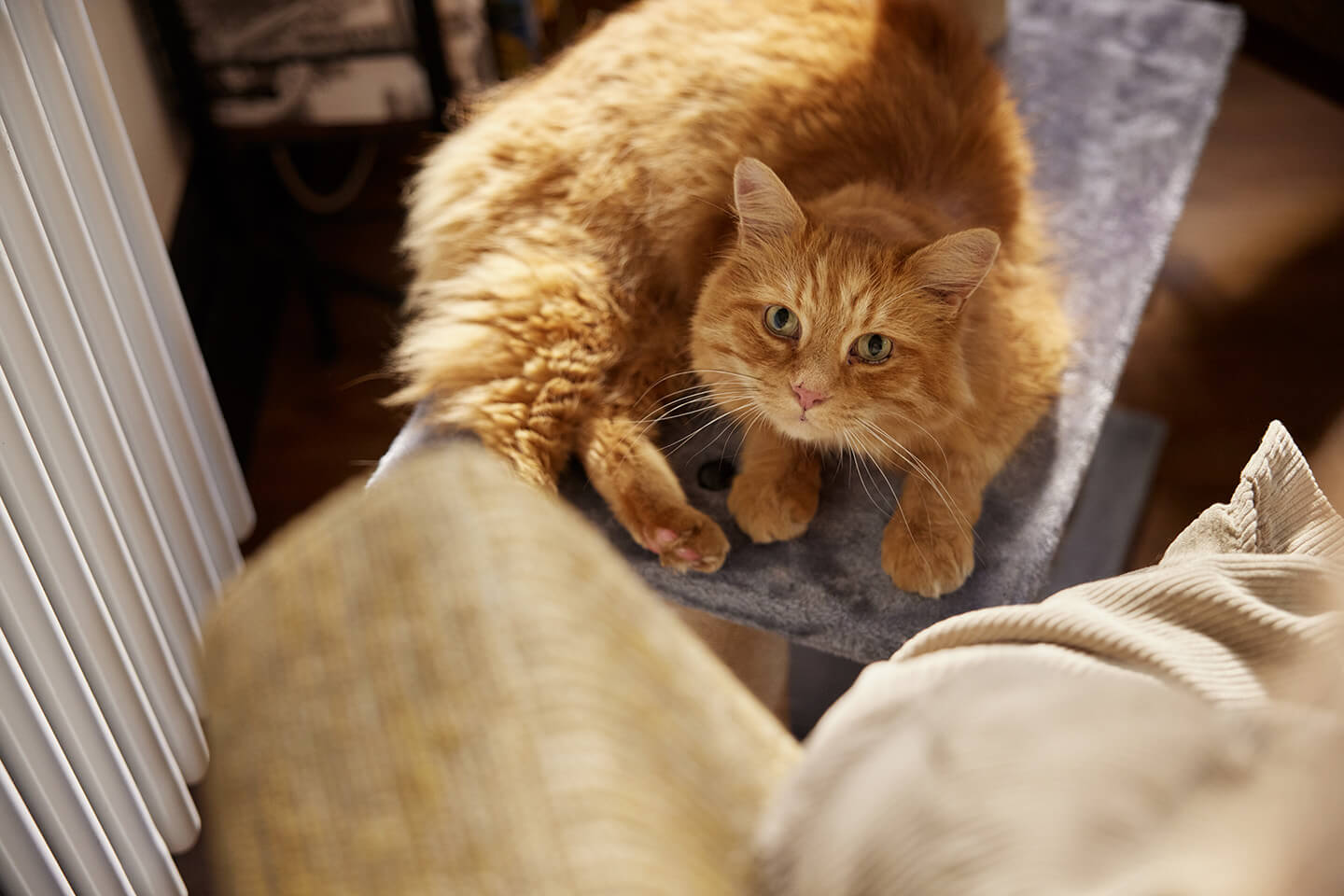
Cats spend a good deal of time grooming themselves, but many will still benefit from a helping hand, especially longer haired cats. Grooming your cat will help to keep their coat and skin in good condition, will strengthen the bond between you and will allow you to regularly check their skin, coat and body for parasites and disease.
Short-haired cats should be groomed once or twice a week to keep their coat and skin in good condition. Long-haired and medium-haired cats need grooming daily to prevent matting and to reduce the hair swallowed by the cat while they groom themselves.
If a lot of hair is swallowed by the cat as it grooms itself, then hairballs can form in the stomach which are later vomited up or passed through the intestine. In longer coated cats, larger hairballs can occasionally get stuck in the intestine and need veterinary intervention. Daily grooming can help reduce the size and number of hairballs formed.
You can also buy cat hairball treatment paste that contains a laxative and lubricant to help them pass through the digestive system. Another option is hairball cat food. These diets contain lots of fibre to help take excess fur through the digestive system. They also contain vitamins and minerals to keep your cat’s fur in good condition and reduce hair loss.
Cats that are older, have underlying health conditions, dental disease or joint pain may need assistance grooming more often. If your cat stops grooming itself, a vet visit is always warranted.
Brushing your cat with a suitable brush helps to remove dead hair and dander (microscopic flakes that shed from the skin surface). Brushing will also loosen and remove matts and help to spread the cat’s natural oils over the hairs, keeping the coat soft and well-conditioned. The act of brushing massages the cat's skin, improving circulation and skin condition. Many cats find grooming relaxing and it helps to increase the bond between you and your cat.
Cat brushes are often smaller and a little softer than dog ones. This is ideal as cats have thinner skin and different coat types making these brushes safer and more effective in most cases.
Our Pets Grooming colleagues will be happy to advise you on suitable brushes for your pet if you would like to discuss this with them.
If your cat is short-haired, then a bristle brush, a slicker brush or a grooming mitt or glove is best for removing debris and dead hair from the coat.
Medium-haired and long-haired cats can first be groomed with a wide toothed comb to remove tangles – tight tangles can be worked out with your fingers without pulling the fur. A bristle or slicker brush can then be used to lift dead hair and debris, which can be removed using a rubber grooming brush or mitt if necessary.
Bristle brushes are general purpose brushes that can be used on all hair lengths and types. They will keep short hair sleek and shiny and can be used as the main brush for short-haired cats. A bristle brush for a short haired cat should have tightly packed short bristles.
In long-haired cats, look for longer bristles that are more loosely spaced and use them at the end of a groom to give the coat a good finish.
A pin brush has pin-like metal bristles with bobbles on the ends to prevent any scratching of the skin. It is used for grooming medium and longer length hair, especially to reduce knots in the shorter fur on the legs and tail. It is also useful for fluffy or woolly cats to prevent matting. The bobbles on the ends of the pins help stimulate the production of oils from the glands within the skin, keeping the coat well conditioned.
A slicker brush has closely packed metal pins that work through the fur and groom out any knots and can be used in all hair lengths as a mainstay of your grooming routine. It removes loose topcoat hairs and keeps the undercoat tangle-free, while helping to spread the natural oils over the hairs, keeping the fur in good condition.
In long-haired cats use a wide tooth comb first to ensure that the bigger knots have been removed before using a slicker brush.
Always use this brush gently to avoid scratching the skin underneath and damaging the hair of long-haired cats.
Moulting combs generally have different length teeth – a closely packed shorter row that will remove dead hair from the topcoat and a wider longer row to detangle the undercoat. Especially good for long-haired cats, this comb will help to remove the clumping undercoat as the cat moults.
If you are teaching your young cat about grooming, or trying to groom an older cat that might be too sensitive, then a grooming glove or rubber brush can be a great help. The glove has one side that is made of silicone or rubber with bobbles or short bristles on it. It looks like a hand, not a brush, so can be used to just stroke the cat gently. The texture of the bristly surface will grab loose hairs, removing them from the coat, and the cat gets a massage at the same time. Rubber brusher have long soft rubber fingers which massage and groom at the same time.
A flea comb is a fine-toothed comb that will remove fleas, eggs and flea-dirt from the coat of your cat. When you start grooming your short-haired cat, you could use a flea comb to check whether there are any fleas or flea-dirt present. If your cat is medium or long coated, then part the hair and look for evidence of flea dirt at the base of the hairs before you start grooming. A common place for flea dirt is by the base of the tail.
Grooming your cat helps to increase the bond between you both, but also has direct benefits for the cat. The coat needs to allow the cat to move freely and comfortably, and any matts or knots restrict that movement and pull, causing discomfort. Fleas are irritating, so early identification and treatment will remove that irritation. The feeling of being massaged also benefits your cat and makes them feel relaxed and more content. Coat condition is improved by the spread of natural oils over the hairs and the removal of any dead hair and debris.
Grooming should be a pleasurable experience for both you and your cat. If your cat is not keen, try a rubber or silicon brush or a grooming mitt to help get them used to the handling. Never fight your cat to groom them. If they are impossible to groom at home, then cat groomers are available or, if very badly matted or get too stressed, a vet groom under sedation may be necessary.