At Pets at Home, we know how important it is to give your cat the right diet to keep them healthy and happy. From choosing between wet food and dry food to knowing when it’s time to make a change, we’re here to help with all your questions. Our expert advice is designed to make it simple for you to give your cat the best care possible, no matter their age, breed, or lifestyle.
An ideal diet is complete and balanced, providing all the nutrients in the correct amounts to your cat. Different life stages need different nutrient balances, so make sure that you feed a diet appropriate for your cat's age.
Cats with health problems may need different levels of nutrients, and there are many veterinary diets formulated to support cats with underlying disease. These should only be fed when recommended by your vet.
Breed specific diets are also available that formulated with common breed health problems and energy needs in mind.
There are lots of different diets available for each life stage and lifestyle. You will need to take into account your cat’s needs and preference as well as your preference and budget. Many diets have added ingredients such as omega 3 fatty acids or supplements for joints, bladder and calming amongst others, each giving additional health benefits for your cat.
If you need further advice on the ideal diet for your cat, then speak to your vet team or ask in store.
The cat food you choose should be complete, this means that it contains all the nutrients that your cat needs. Wet and dry cat foods of the same brand and type are similar nutritionally, with wet foods typically containing over 60% water and dry foods less than 14%. You could feed just wet or just dry, though many people choose to feed both. Your cat may choose to eat just one or the other.
There are pros and cons for both types of food that need to be considered.
Wet food: many cats get most of their water from their food, so feeding wet foods supplies water if the cat is not a good drinker. Increased water intake will benefit cat with health issues such as urinary conditions, kidney problems or constipation.
Wet food is available in small sachets, so it’s possible to keep a variety and give your cat a change. Unopened wet food has a long shelf life, but after opening, it spoils quickly so should be removed after 30-60 minutes.
Wet food is more expensive, needs a bigger amount to be fed daily than dry food and you may throw a fair amount away if your cat is a grazer and doesn’t eat full meals.
Dry food: is more cost effective than wet food, has a much longer shelf life once opened, but is available in larger packs, so the offered diet is less varied. It can be left down for cats that graze (which is how they’re designed to eat) without going off and can be used in enrichment toys that have food in them. Crunchy kibble is thought to be better for dental health than wet food, as chewing the nuggets can help clean the teeth. A dental veterinary diet will give you the best results.
It is easy to overfeed cats with dry food – cats only need a small amount every day and, if a full bowl is left down, the cat can easily eat more than they need.
A thin cat with reduced appetite may hold its weight better if fed dry food with a small kibble size. There is less water content in dry food so fresh water should always be available.
Many cats appreciate a mix of wet and dry food, small meals of wet food two or three times daily, with dry food available in between. Just make sure that if you mix feed, you check the feeding guidelines for each type of food and adjust the daily amount as required to prevent overfeeding.
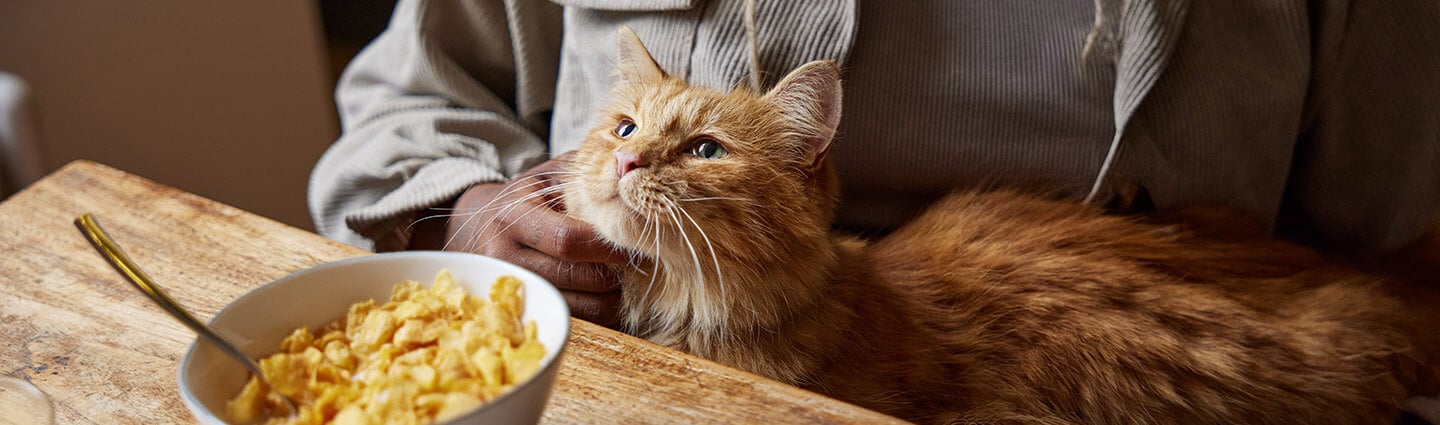
It depends on the cat. All cats should receive the amount of food recommended on the food packaging for their weight and age. Kittens will need three or four meals daily, but it is also recommended that older cats have at least two.
If your cat grazes through the day and has dry food down all the time, then mealtimes are not necessary. Monitor your cat's weight closely if they prefer to eat this way; for some cats it will lead to overeating and weight gain.
Cats that are fed wet food only may need more meals than dry food fed cats. Wet food cannot be left down as it spoils, and the amount of wet food needed to supply your cats nutritional needs will be higher than if feeding dry.
Cats will generally tell you exactly when they want feeding, some cats like larger meals twice daily, but others prefer to eat little and often. Automatic feeders and other smart pet care solutions work well for pets like these.
There are times when you may need to consider changing your cat’s diet. Lots of nutritional research has been done to determine the correct nutrient balance for different ages, breeds and health conditions in cats. Diets have also been formulated to cater for weight loss, weight gain and different taste preferences.
So, as your cat grows and ages, if they develop any health conditions, if they lose or gain weight or just go off their food, you might need to look for a different diet.
Yes - Cats have different nutritional requirements according to their age and their diet needs to match those requirements.
Kittens need high energy diets with the correct nutrients for fast growth in a small bite form, so should be fed a kitten food until they are 1 year old. Large breed cats like the Maine Coon should stay on kitten food until they are 18-24 months old as they take longer to mature.
Adult cats between 1 and 7 years old are generally fully grown and as such need lower levels of protein, energy and fat than kittens. Adults tend to gain weight, especially since most adult cats are neutered, so weight-loss or neutered cat diets should be considered. Indoor cats will also need fewer calories than cats which spend time outdoors.
If your cat is over 7 years old, they benefit from a senior diet to help keep them healthy into old age. Senior diets have smaller nuggets, so it is easier for older cats to eat. They can be formulated to support joints, kidneys and immune system while maintaining weight.
Switching to a more targeted cat food may be beneficial depending on your cat’s needs. Veterinary diets are now readily available that can help correct your cat’s weight, or support underlying conditions such as kidney, gastro-intestinal and urinary disease. Having the best diet to support the health of your cat can improve the management of health problems. Your vet can give you advice on the diets that are available to help your cat. Explore our range of Cat Food for Health Conditions to find specialised formulas tailored to support various health needs.
Some cats are just very fussy eaters. The types and flavours of food that your cat will eat are determined when they are a kitten. If they are not offered a variety of foods when young, then cats may just want to stick to what they know when they are older. You may need to try different types of food, such as wet, dry, in gravy, pate or soup, along with different flavours, such as fish, poultry or meat to find one they like.
Remember that cats are clever people trainers. If you offer human food or treats when your cat refuses to eat, they will learn to not eat the cat food and just wait until something else is offered. So, when you are trying to tempt your cat to eat, stick to balanced cat foods and resist offering treats or human food.
If your cat is refusing or struggling to eat, it’s likely a sign they’re unwell. Many diseases can depress a cat’s appetite and so a vet check is always advised. Unlike in dogs, it can be very dangerous for cats to for periods without food. As a species, they can develop liver problems if they go without food even for a short time.
Slowly. Cats can be very fussy with their food, so if you must change your cat’s diet, make it a gradual change. Start by mixing a little of the new food in with the old, then gradually increase the new food and decrease the old, until just the new food is being offered. With dry food, you could also hand feed a bit of the dry food as you would a treat.
Once your cat is eating the new food, it is important to monitor their bodyweight. If your cat starts losing or gaining weight on the new food, then adjust the amount of food offered accordingly.
The packet instructions will tell you how much food should be given daily. If you are not sure how much to feed talk to one of our colleagues in store or contact your veterinary team for advice.
If you have run out of cat food and cannot buy the same one, try and find the same brand, but in a different format or flavour, to keep the food as similar as you can. If you change a cat's food suddenly, there is always the risk of an upset tummy or food refusal, so it is advisable to always keep a couple of weeks stock at home, so that you can do a phased change-over if necessary.
We don’t advise homecooked diets as they are extremely difficult to be correctly balanced. There is a wide variety of proprietary balanced cat foods that cater for all tastes. Cat foods are available in raw, fresh cooked, wet and dry forms and so give options for even the pickiest of cats.
If you are feeding a complete dry cat food, then your cat needs nothing else apart from water available with it. The food will be balanced to supply all your cat’s nutritional needs. If your cat enjoys dry food and has fresh water always available, then they can stay on just the dry food.