Life has never been cushier for the modern cat, with warm radiators and snacks on standby. With fewer hunts and more helpings, it’s no surprise some are carrying extra weight! But this does come with health risks.
To keep them fighting fit, it’s a good idea to loop in your vet for support.
Healthy weight isn’t just about the number on the scale; it’s about body shape. A small but muscly cat can weigh more than a larger, willowy one. What you’re looking for is overall body condition.
Here’s a quick home check for how they should be built:
- A visible waist when viewed from above. (Think gentle hourglass, not furry rectangle)
- A tummy thatdoesn’t hang low when viewed from the side.
- Ribs that can befelt, but not seen.
- No ruff of fat over the neck and shoulders.
- Not too much spreading out on the floor when lying down.
On the flip side, if you can easily feel their spine and pelvic bones and their waist looks dramatic, your cat may be underweight.
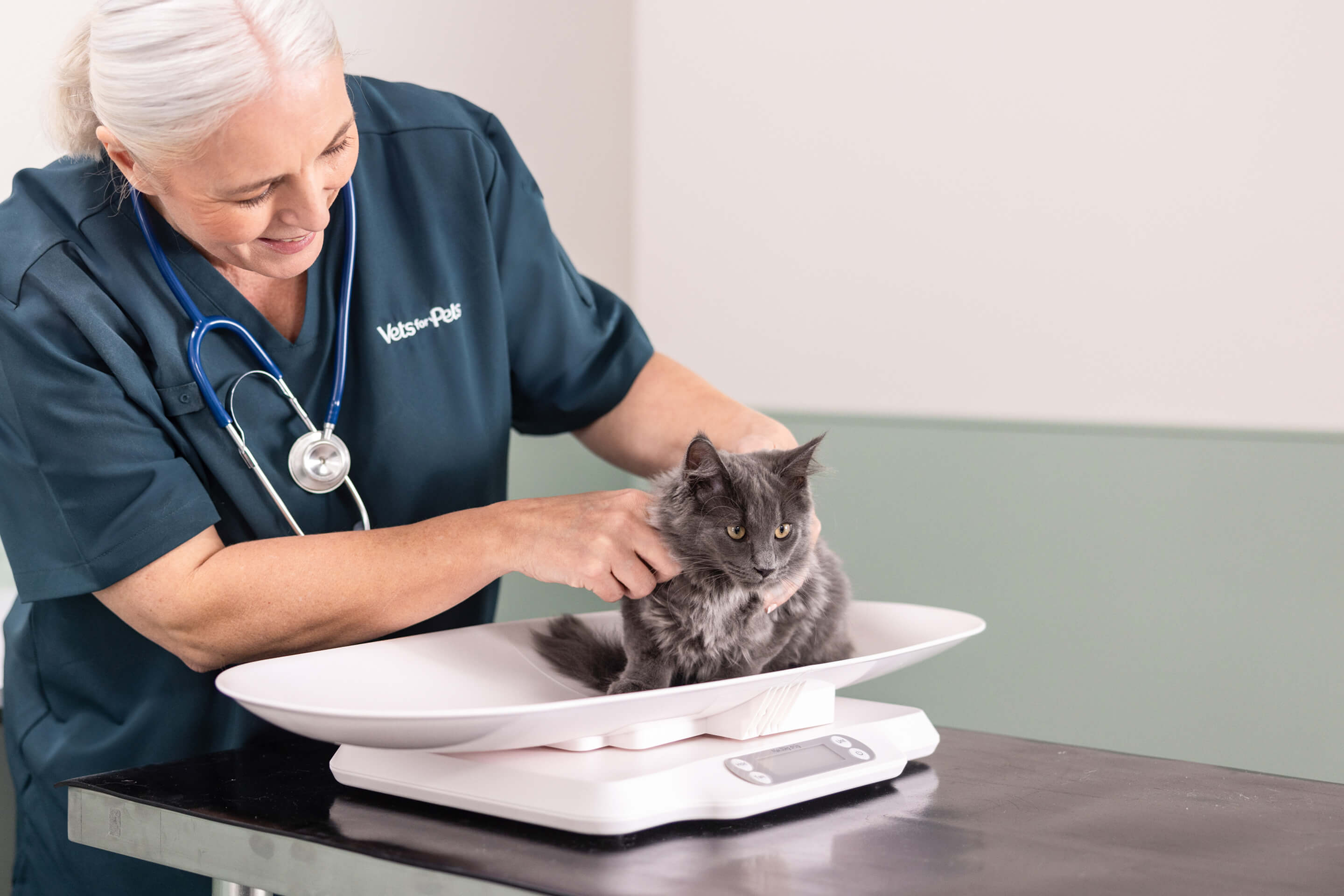
Scales at home can be a battle of wills, but placing them in their pet carrier before putting it on the scales can make things a lot easier. Just remember to deduct the weight of the empty carrier. You can also get regular weigh-ins at your local vet practice.
Cats come in all shapes and sizes.
Smaller or leaner breeds like Siamese often weigh less.
Chunkier-framed or giant breeds like Maine Coons can weigh a lot more and still be completely healthy.
Cats aren’t meant to hit one exact number. What matters is whether their weight matches their frame and their overall body condition.

For most cats, it’s a simple: high calorie count, low step count. But other factors can also be at play, like age, mobility, stress, neutering, and medications.
Indoor cats have easy access to food and fewer opportunities to burn it off. When food is always topped up, cats tend to snack their way through the day: kibble, wet food, a bit of your sandwich if you’re not watching.
It’s often assumed that outdoor cats stay slimmer. But just because they go out, it doesn’t necessarily mean they’re more active. They may also have struck up a friendship with the neighbour who offers bonus meals.
Extra weight brings extra risks:
- Diabetes
- Lower urinary tract disease
- Heart disease
- Arthritis
- Matting of the coat due to poorself grooming
So a heavier cat is certainly not a healthier cat. Obesity can quietly shorten their lifespan.
If you’re starting a weight-loss plan, involve your vet team. Cats need to lose weight slowly, or they’re at risk of liver complications. Your practice can provide all the necessary advice, as well as regular weight checks to help measure progress.
Weight loss is a mix of controlled portions and slow, steady progress. Think marathon, not sprint. For example:
- Switching gradually to a lighter or weight-management food. Seek vet advice for guidance on best options before making any changes.
- Trimming back treats and table scraps. Treats should be part of the daily calorie ration.
- Getting exact feeding amounts from your vet and weighing out portions accurately.
- Getting everyone in the house on the same page (no accidental second breakfasts).
- Using a‘Please Don’t Feed Me’ collar for neighbours’ benefit.
- Remembering that hunters may naturally burn calories, but ifthey’re also having their usual rations at home, they may be getting an excess of calories.
- Encouraging activity:toy chases, puzzle feeders or scattering tiny portions around the house.
Cats lose weight when they’re not absorbing or using nutrients properly. That might be down to the food in the bowl or a medical issue behind the scenes.
Some of the possible causes:
- A diet missing key nutrients.
- Dental problems that make mealtimes a no-go.
- Hyperthyroidism- metabolism in overdrive.
- Diabetes- the body burns fat and protein instead of sugars.
- Kidney disease- low appetite and protein loss.
- Parasites.
- Cancers.
- Stress
If your cat is slimming without trying, let your vet take a look. Once you know what’s going on and any underlying health concerns have been ruled out, the right diet can help them regain their usual svelte silhouette.
Some cats are culinary critics, especially if they weren’t introduced to different foods as kittens. New meals may require a slow approach: a little hand-feeding, a little mixing, a lot of patience.
If your cat goes outdoors, don’t forget the possibility of mystery meals from a neighbour.
But if they’re skipping meals and losing weight, it’s usually more than fussiness. Dental pain, illness or stress can all put a cat off their food. A vet check will help uncover what’s really going on so don’t wait too long before you seek advice.
Fluff can be a clever disguise. A healthy cat should show a gentle waist from above, a tummy that stays tucked rather than swinging, and ribs you can feel without playing hide-and-seek. If your cat has shifted from sleek hunter to soft furnishing, it’s time for a closer look.
There’s no need to pick sides, cats are perfectly happy with a mixed menu. Wet food has more aroma, while dry food scores points for convenience and maintaining dental health. Many owners use both. The real trick is portion control, not letting your cat overeat.
Cat’s stomachs appreciate a smooth transition. Sudden food changes can upset digestion. Gradually blending foods over a week keeps the gut settled and avoids unnecessary protests at mealtimes.