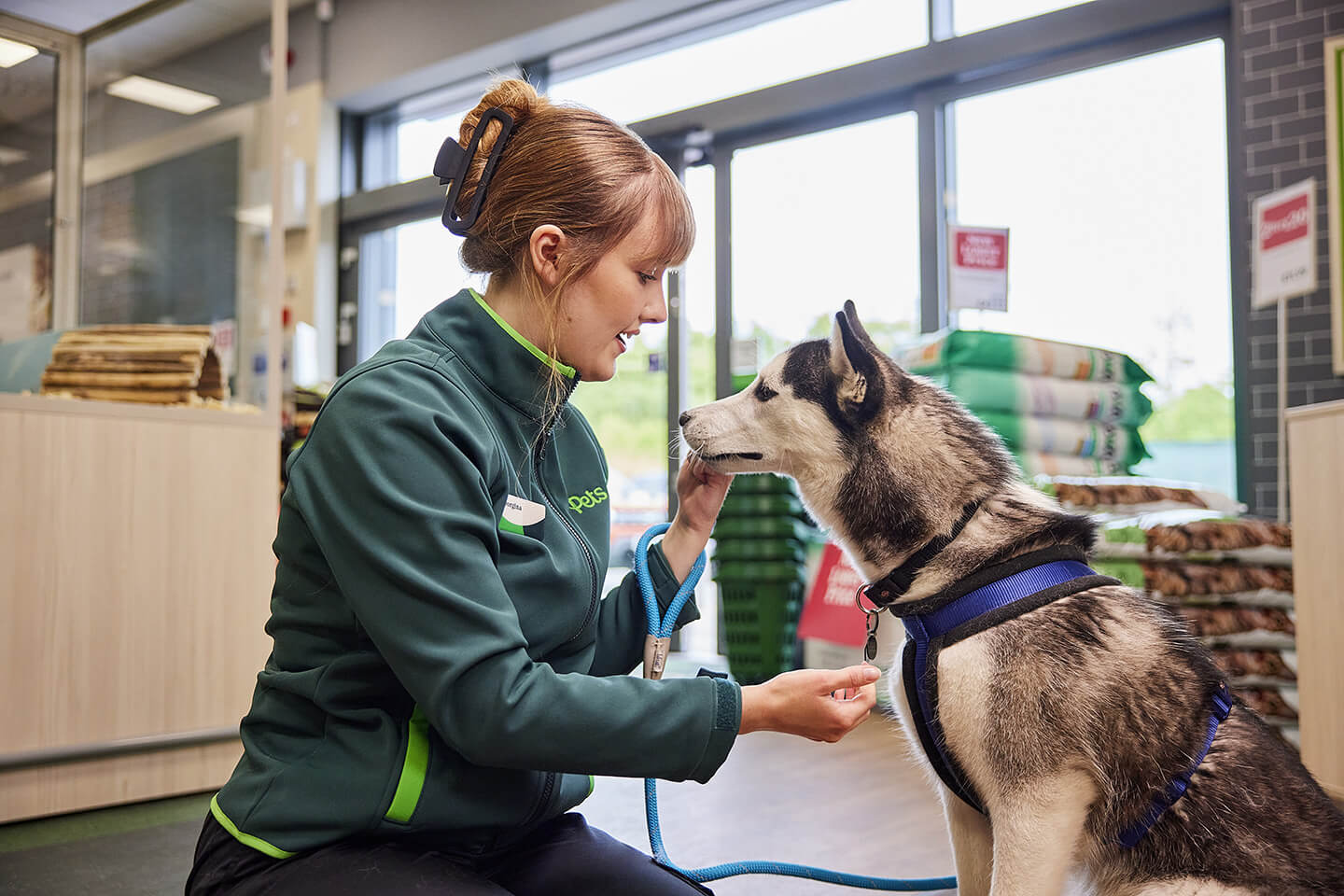
As a dog owner, you’ve likely perused the toy aisles of your local Pets at Home store countless times, wondering which item will spark the most joy to your beloved companion. Toys provide a much-needed source of stimulation and entertainment and encourage dogs to be active. There are, however, hidden risks that you may not be aware of.
Choosing the appropriate toy for your dog is essential for safe play. Make sure you choose a toy suitable for the breed of dog you have. Smaller dogs need different sized toy to their giant counterparts. Voracious chewers will need more robust toys.
Always supervise your dog when they are playing. Remove any damaged toys immediately to avoid any part being swallowed by your dog.
Choose appropriate play. Do not allow your dog to become overstimulated or display undesired behaviours such as chasing or biting. Choose lower impact play types for young or older dogs to protect their joints from harm. For example you could swap chasing games for training or search games.
Ensure you are playing on a suitable surface. Slippery surfaces increase the risk of injury. A softer surface such as grass may be more appropriate for some play that requires moving at speed as it is softer in the case of a tumble and provides good grip for your pups feet.
To avoid any choking incidents during playtime, we highly recommend buying chewable toys and balls that are proportionate to the size of your beloved pet. They should be small enough to comfortably hold in their mouth, but big enough that they cannot close their mouth around them. This will help ensure that choking hazards are ruled out. Avoid toys that have solid loops as these can get caught around your dog's jaw and head. Choose ones that will not get stuck.
Match your chosen toy to your dogs age and temperament. Do they prefer to play fetch with their ball or are they a chewer and likely to swallow parts? If it’s the latter, perhaps a ball isn't the right toy for them. Puppies will need softer toys until their adult teeth come through. You’ll find toys specifically for puppies in store! Puppies and older dogs may also need more gentle exercise so balls and chasing toys may be better avoided.
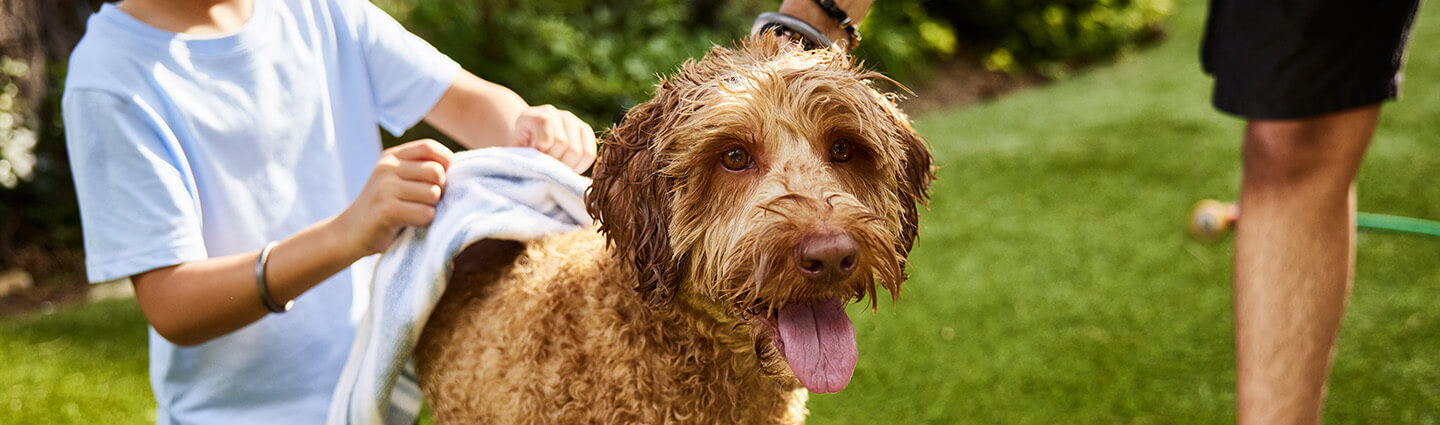
When picking out a ball for your dog, it’s a good idea to keep in mind the size and shape of your pet’s jaw. Some dogs have wider mouths than others. Always check the sizing and dimensions for each toy you’re considering, especially when buying online - things can often appear bigger than they are in person, and you may end up disappointed with the size of your dog’s new ball. Always select a ball which is wider than your dog's throat. Look at the width of the base of a muzzle suited to your dog’s size for a rough guide.
Take care if your dog is a ball chewer. This can lead to teeth wearing down over time and can cause painful dental problems.
Lots of videos online and in the media may have us believe that the best way to have fun whilst playing with your dog is by throwing the ball directly at them, encouraging them to reach for it mid-air in a majestic jump. However, this can cause more harm than good, as this can increase the risk of accidental swallowing or choking.
Another risk associated with throwing a ball directly at, and above your dog, is cruciate ligament damage. This is a common and serious injury that can occur when a dog jumps up and twists as they land. It’s an unnatural movement for them to do, and if they land awkwardly cause a serious injury, likely to require surgery. Spinal damage can also be a problem for some breeds. Dogs with elongated bodies such as dachshunds and corgis are more susceptible to spinal damage from twisting during play. Take more care with those breeds.
Instead, you'll have just as much fun throwing the ball away from, or ahead of, your dog, encouraging them to chase and retrieve rather than catch in the middle of movement. This experience can also be enhanced by putting a reward system in place, where you teach your dog to fetch a ball, sit and wait for the ball to be thrown again after they’ve received a treat. This helps play in a more controlled way and is therefore safer.
After you’ve been playing for a while, you might also want to pay extra attention if the ball gets wet and slobbery, as it can be more slippery and harder for your dog to hold onto, therefore becoming a choking hazard. Instead, remove and dry the ball once you’ve finished playing, replacing it with a bigger toy for your pet to chew on if they need the added stimulation between playtimes.
Keep sessions short. Over exercising can tire your dog and put unnecessary strain on joints and muscles. Your dog can easily become over excited and forget to rest. It is easy to cover a great distance in just a short walk when you are continually chasing after a ball.
Dogs can be compulsive chewers. If that’s part of your dog’s temperament, tennis balls are best avoided. Tennis balls are designed to be hard-wearing because of the nature of the game, and the coating around the ball is very abrasive and hard wearing.
Here are just some of the issues that could occur if a tennis ball is in the paws of an excessive chewer:
- It can wear down the enamel on your dog’s teeth leading to dental issues known as ‘blunting’. This is especially prevalent with dirt and grit on the ball, as it gives the material a sand-paper-like effect
- Dangerous blockages could happen easily if any material is ingested. The fuzz on the material doesn’t break down in your dog’s intestines or stomach, which could be life-threatening
- Even when your dog has released the ball, glue from the toy can remain on their teeth
It pays to be mindful of the potential hazards that some toys may present. Whether you’re a new pet parent or an experienced dog lover, keeping in mind the following rules will help you enjoy stress-free playtime with your dog;
- Keep toys clean as dirty toys can lead to infection and tummy upsets
- Always ensure the ball/toy is large enough for your dog to carry without the risk of accidental swallowing, but small enough to hold comfortably
- Always supervise your dog when playing with toys
- Safely remove wet and slobbery toys and leave to dry, to avoid accidental swallowing
- Regularly check that your pet’s toys are in good condition, and throw away any old and damaged items that may cause accidental choking incidents
- For toys with squeakers inside, it’s advised you regularly check there are no clear tears in the fabric of the toy that may lead to your dog accidentally swallowing the squeaker
- Never throw the ball directly at your dog to catch, instead throw away for them to chase and retrieve, or try rolling it along the ground.
All dogs are individuals and will need different amounts of play. There are some key factors to consider when determining appropriate play durations:
Breed – Different dog breeds have different energy levels. Herding/working breeds tend to have very high energy levels. Brachycephalic breeds will need shorter play sessions that allow them to maintain their oxygenation. Over exuberant play can cause difficulties with breathing and overheating in these breeds.
Age – puppies need gentle play as they grow and are more prone to chewing. Juvenile and adult dogs may need longer play sessions to keep them entertained, senior pets are likely to need reduced duration and intensity play sessions.
Health – Dogs that have health conditions or are feeling unwell may need reduced play sessions or gentler play types.
This is very much dependant on your dog's personality. You need to observe your dog to discover what they find exciting. Some like to chase, others to chew or maybe they prefer to use their nose to locate items. When you have identified your dog's preference you can initiate play by mimicking or encouraging their chosen play behaviour.
Play behaviours tend to fall into four categories:
Chasing – This encompasses games where your dog runs and retrieves and object
Tugging – These are games where you dog enjoys pulling items that you are holding.
Searching – Your dog enjoys finding objects, people or food, using their senses. Mental stimulation can be just as tiring as physical exercise.
Hunting – This covers pouncing and shaking behaviours. These dogs love a squeaky toy
It is always advisable to teach your dog the leave command to allow you to remove objects from them and prevent accidental ingestion during a play session.
Play in short bursts of up to five minutes and finish whilst your dog is still keen to play
When playing use an excited voice with lots of praise and encouragement
There have been numerous studies carried out looking at the impact that occurs if you do not play with your dog. Dogs that do not receive regular play and interaction have been shown to have higher levels of undesirable behaviour, aggressiveness, stubbornness and anxiety. Dogs can also become withdrawn and lethargic.
Avoid jumping – keep toys below waist height and throw balls ahead of rather than above your dog, jumping puts unnecessary stress on muscles and joints and can result in injury.
Sticks – Although some dogs love sticks, they are hazardous. Splinters can cause terrible injuries and can be difficult to remove from the mouth and throat. The ends of the stick can also cause puncture wounds easily. These can be catastrophic if they penetrate the throat, chest or abdomen.
Rough play – Avoid wrestling games and NEVER let your dog chase children.
Never force your dog to play – short, frequent play sessions when your dog is active are far more beneficial from enforcing play when your dog requires rest.
Although every dog loves chewing, there's no one-size-fits-all chew toy or treat for every dog.
The best option for your dog will depend on what type of chewer they are:
- Gentle chewers – Unlikely to break or damage toys. Stuffed toys or rubber chew toys are ideal
- Average chewer – Loves toys but can damage them. Rubber toys and those that are more solid are often favourites here.
- Powerful chewer - Choose an indestructible toy and check it regularly for damage
- Age of the chewer – Puppies have deciduous dentition (puppy teeth) and its important they do not chew anything too hard and cause damage to these. Likewise older dogs may have dental disease and may prefer softer chew toys.
No matter what breed, age, or chewing style your dog may be, we've got the perfect choice for them.
There is no such thing as a truly indestructible dog toy. Some dogs have the potential to destroy any toy if they put their mind to it so if you have an expert chewer, beware.
Check your dog’s toys regularly for signs of damage and if it looks like your dog is starting to destroy a toy, remove it from play so that bits of it that come away can’t be swallowed.
If your dog is a fan of soft toys with squeakers, keep a close eye on what they are doing with them. If your dog manages to rip a hole in a soft toy there is a danger that they could swallow the squeaker within. Again, if a toy becomes damaged you should remove it from your dog immediately.
It doesn’t matter if your dog is tiny or tremendous in size, dogs generally love chewing. Each dog has their own style of chewing, and it is important you assess your dog closely before purchasing chew toys. To ensure the chew toy you purchase is safe you ned to match it to your dog.
The toy neds to match the size of your dog and the size of its jaws. make sure it can be held comfortably but not inhaled or swallowed. It also needs to be robust enough for your dog. No toy is truly indestructible so they should be inspected for damage. All damaged toys should be removed for safety.
Soft toys can easily house mould and bacteria. To keep them clean, first brush away any dry dirt before sanitising them in the dishwasher, if you have one. Place the toys in the top rack and run the machine on a hot cycle to clean using very hot water and strong water pressure. If you don't have a dishwasher, clean them in your washing machine using a hot cycle. Allow soft toys to air dry afterwards.
Dog must always be monitored with toys as they can become unsafe quickly if they are either damaged or become wet and slippery. No toy is ever entirely safe. The best and safest toy is the one your dog enjoys under supervision.