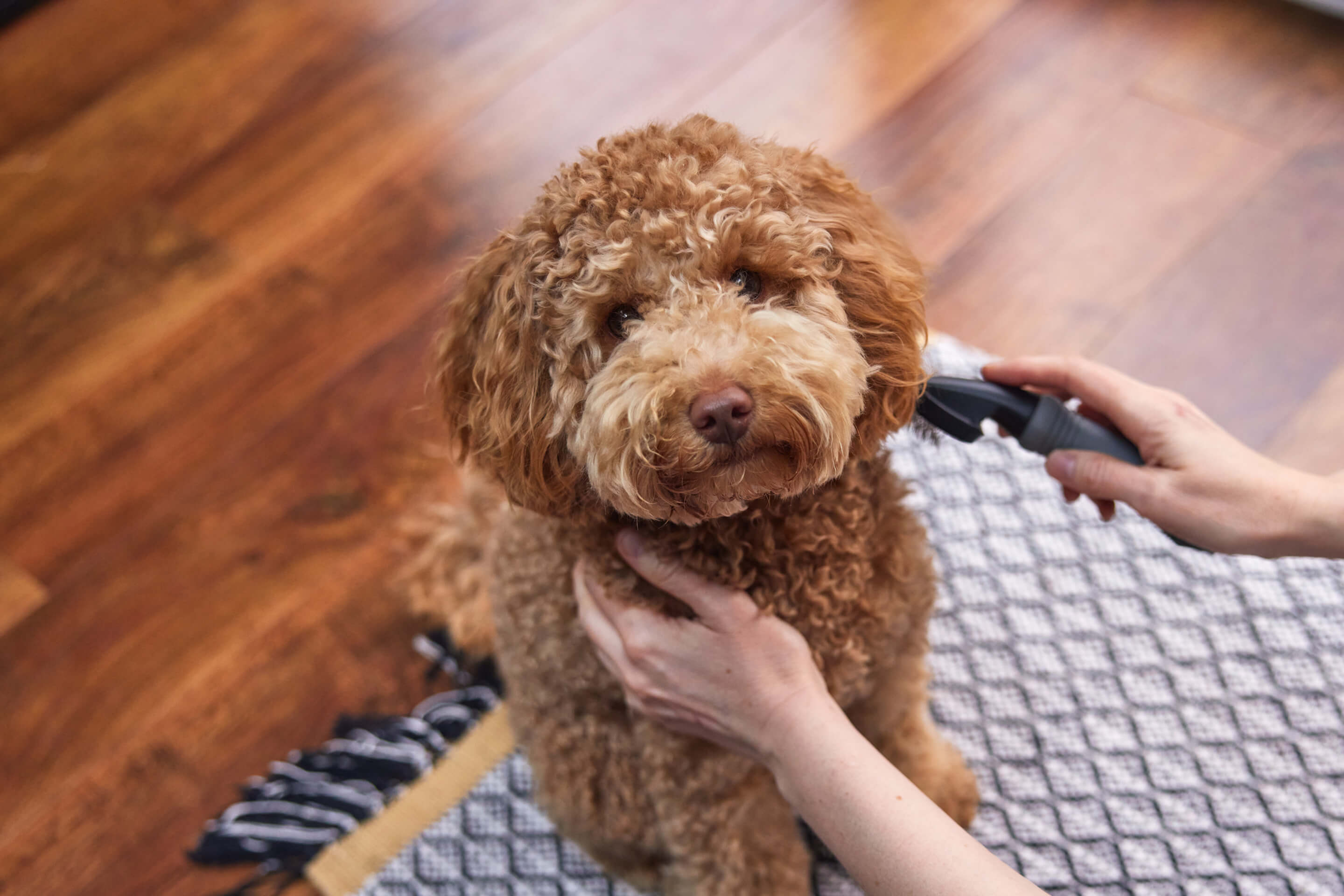
Good grooming is about more than just a tidy coat. It’s how you keep tabs on your dog’s health, from nose to tail. It’s a great way to spot changes in their wellbeing and keep their life running smoothly.
A daily once-over is ideal. Luckily, you’re halfway there just by petting them. Stroking them helps you spot changes in coat texture, debris, or the beginnings of matts.
You’ll also catch any lumps, bumps or sore patches before they turn into bigger issues. All things your vet should look at.
For long or curly coats, check the classic hideouts: around the face and ears, between the toes, inside the legs and around the tail.
Brushing keeps the coat healthy and stops your sofa becoming a furry crime scene.
Short coats: a weekly once-over is usually enough.
Long, curly or double coats: they need daily brushing to stop matts from taking over.
Heavy shedders: the more you brush, the less dog fur decorates your house.
Need help choosing a brush? The Pets at Home Bristle Brush for Dogs & Cats is a great start, but the Pets Grooming team can pair you with the right one.
Curly or quick-growing coats usually need a tidy every 6–8 weeks, or they tend to get a bit unruly. Coarse coats may need hand-stripping every few months. If you’re not sure what your dog needs, just ask the Pets Grooming team.
Only when they really need one. Over-bathing washes away the natural oils that keep their coat healthy, so a rinse or targeted clean keeps things on the right track. Bring out the full bath for the big moments: fox poo, muddy zoomies, or any smell that has real staying power. Choose mild shampoos made for dogs. The Pets Grooming team can recommend the best match for sensitive skin, or handle the whole scrub from nose to tail.
Ear cleaning should always be carried out under vet advice. They will be able to check that the ear is healthy and can recommend the most appropriate products to use. There are some dogs which need routine ear care:
- Floppy-eared breeds like Spaniels. (Not great for airflow)
- Dogs with hairy ear canals, like Poodles.
- Breeds with narrow canals, like Pugs.
Any dog with extra wax may need a clean, too.
If the ears smell ‘off’, look red, or your dog looks uncomfortable, make sure to book a vet check. They’ll sort any infection and recommend the right cleaner for your pup’s ears.
If you’re going to clean their ears yourself, there’s a process you should follow.
Use a liquid ear cleaner. Lift the flap, let the liquid run into the ear canal, and give the base a slow rub. A little moment of zen. Wipe round the entrance of the canal with cotton wool, but do not use cotton buds. They just pack the wax in like a dog burying a toy, and risk damaging the ear drum.
And choose a ‘splash zone’ spot, away from furniture. Otherwise their shake-off can redecorate the room. If you’d like a quick tutorial, a vet team will be happy to help.
Some dogs never need a trim: plenty of pavement pounding keeps their claws naturally filed. Others may need trims if they walk mostly on soft ground or aren’t very active. Older dogs often need more frequent nail care, and dew claws always deserve a regular check.
Check every couple of weeks: if the nails are starting to tap on the floor or curl, it’s clipping time.
If you’d rather avoid a paw-dicure mishap, Pets Grooming can do it for you.
Daily brushing is best. Plaque doesn’t waste time settling in.
If that’s tricky, brushing a few times a week still keeps their bite in good order.
And if your dog refuses to ‘say cheese’, dental chews and additives can help keep things tidy between brushes.
Ease into it: start by handling their head and lifting their lips so it all feels normal.
Let them taste a dog-safe toothpaste, then try a gentle finger rub on a few teeth.
Introduce a soft brush once they’re comfortable, and build up from there.
A little patience goes a long way toward keeping their bite in good shape, and your groomer can guide you if you need a refresher.
Start brushing from the moment they arrive. Just a few gentle strokes so your pup learns the brush isn’t something to run from. Keep sessions short and sweet.
Do it in the same spot each time and reward well, so your puppy begins to think of it as their little ‘groom-and-treat’ station.
If they’ll need trims or hand stripping when they’re older, early Pets Grooming visits help them grow up feeling right at home on the table.
Older dogs can get a bit more scruffy around the edges: matting happens faster, and stiff joints make long sessions tricky. The Pets Grooming team is trained to keep things gentle and steady, giving senior pups the comfort they deserve. Routine grooming also helps flag any early health changes for your vet to check.