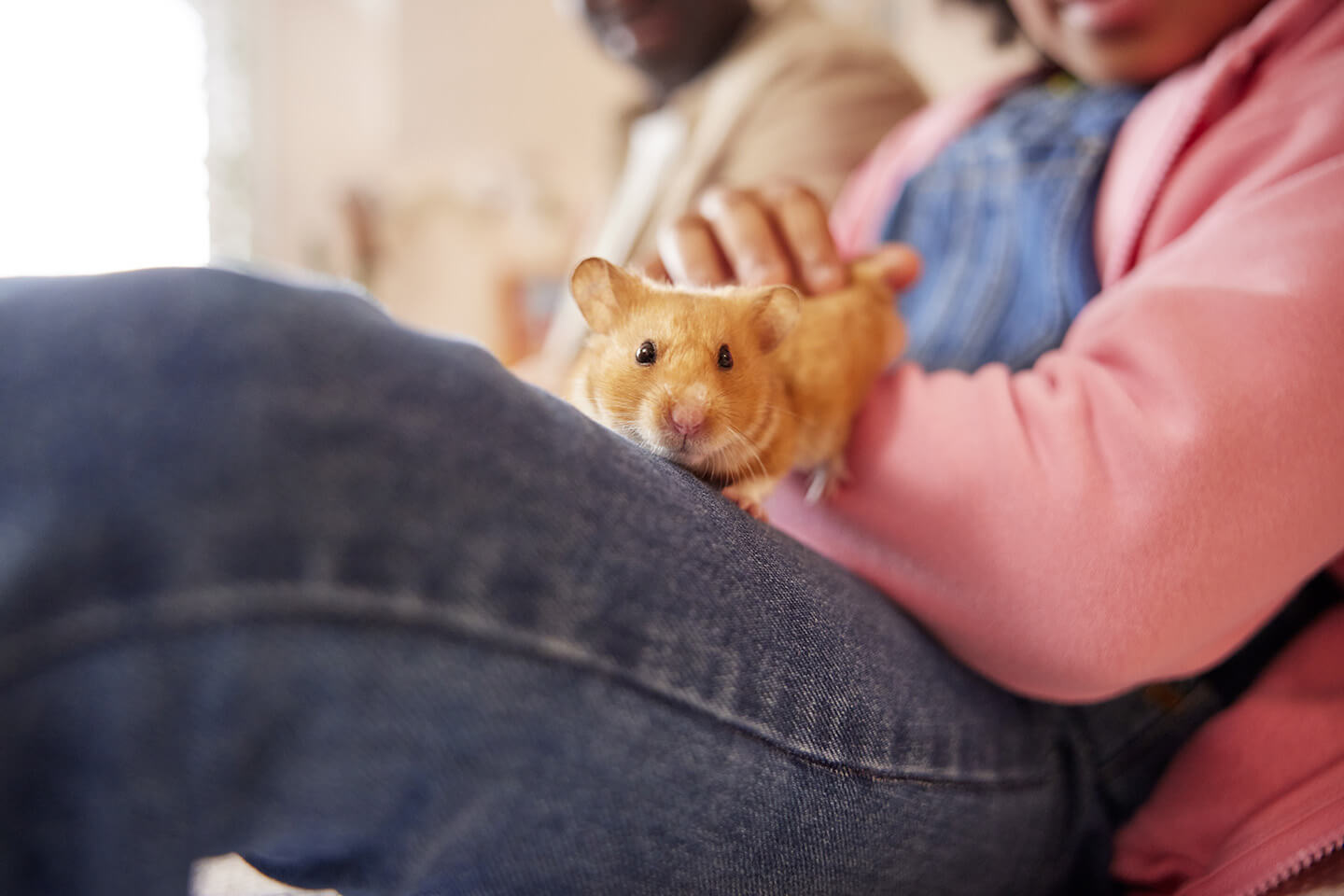
Bringing home a new hamster is an exciting moment. After all, hamsters are engaging animals with wonderful personalities and you’re sure to want to get to know your new pet straightaway. However, it is important to get your hamster used to being held gradually. A new home environment can be stressful or even scary for your new pet, and it can take some time for your hamster to get used to all the new sights, sounds and smells.
While handling is important, it is also essential to give your hamster space when you first bring them home.Moving into their new home will be stressful for them, so it’s a good idea to keep these stressors to a minimum at first. There will be no need to rush into handling. It is important to give your hamster several days to adjust to their new home.
Placing your hamster’s home in a quiet space where they will be able to hear people but not be disturbed by them could be a good idea.Once you feel your hamster is comfortable in their new home (for example, they’re eating, drinking and exploring their home with no problems), you can move on to helping them get used to you gradually.
First let them get use to your voice before entering their cage. Next allow your hamster to explore your hands(s) without trying to pick them up. Handfeeding can be a good way to get your hamster used to your hand being close to them. Be careful when doing this. Choose items that are large enough for your hamster to take without touching your hand to begin with. Hamsters will occasionally take exploratory nips as they investigate hands. It is important that you do not scare or injure your hamster by accident if they do this. Only when your hamster is comfortable with this should you attempt to gently scoop them up.
Form a cup with both hands on either side of their body. Scoop them up securely with both palms. Be very gentle and careful that your hamster doesn’t jump out of the top of your hands.
Never wake a sleeping hamster. Handling needs to happen on their terms so ideally when they are active in the evenings/at night. Young children should never be left unsupervised around a hamster, and we recommend that they don’t hold them but feed them treats and gently stroke them in their cage instead.
Training your hamster to be handled is not complicated, but it will take time. It’s important to take things slowly and repeat steps in the process if you feel it is needed.
Once your hamster is used to your hand being in the cage (and associates it with a reward), try placing a small piece of treat on the palm of your hand again. If your hamster climbs completely into your hand, gently try to scoop them up. At first, your hamster may be startled by this and jump from you. If you keep repeating the process, you should find that your hamster begins to feel safe when being handled.
When handling your hamster make sure no other pets are around. Do not hold them at a height in case they fall. To begin with hold them in their enclosure. That way if they are scared and jump from your hands they will be in a safe environment and less likely to injure themselves. Once you are able to handle them safely outside of the enclosure, ensure that you always handle them over a table or in a playpen to prevent escape and injury.
Young children should never be left unsupervised around a hamster. We recommend that they don’t hold them until calm and confident but feed them treats and gently stroke them in their cage instead.

It is important to get your hamster used to you gradually. This will help to make your hamster feel safe and comfortable with you and their new home. Getting the hamster used to both you and your home before attempting handling will help them to feel happy to be handled by you.
You can bond with your hamster without handling them. Many are happier to have company on their own terms. They can explore you and their environment and choose when they wish to initiate contact with you.
Handling can however be important for their welfare. It allows you to safely remove your hamster from their cage during cleaning, for a check-up or when you need to take them to the vet.
If you hamster bites you gently return them to a safe space. Give the bite wound a thorough clean with soap and water. If you feel unwell or the wound becomes red hot or swollen (even a couple of days after the bite) seek medical advice from a GP or pharmacist.
If your hamster is scared the steps you need to follow will be the same. The time taken over each step will however be longer. Do not progress until your hamster is happy and relaxed. Rushing the process will cause your hamster stress and you are more likely to get bitten.
The time it takes for your hamster to become tame will depend on your individual pet. Some hamsters relax very quickly, whereas it may take much longer for others to learn. Patience, routine and gentleness will be the key to success when training your hamster. Not all hamsters will enjoy handling, some never do. Hamsters that do not enjoy handling will still enjoy exploring their enclosure. Interact with them by making use of any toys or objects you give them to change their habitat regularly and give them something new to explore. Building them interesting and new set-ups and watching them explore can be lots of fun for you both.