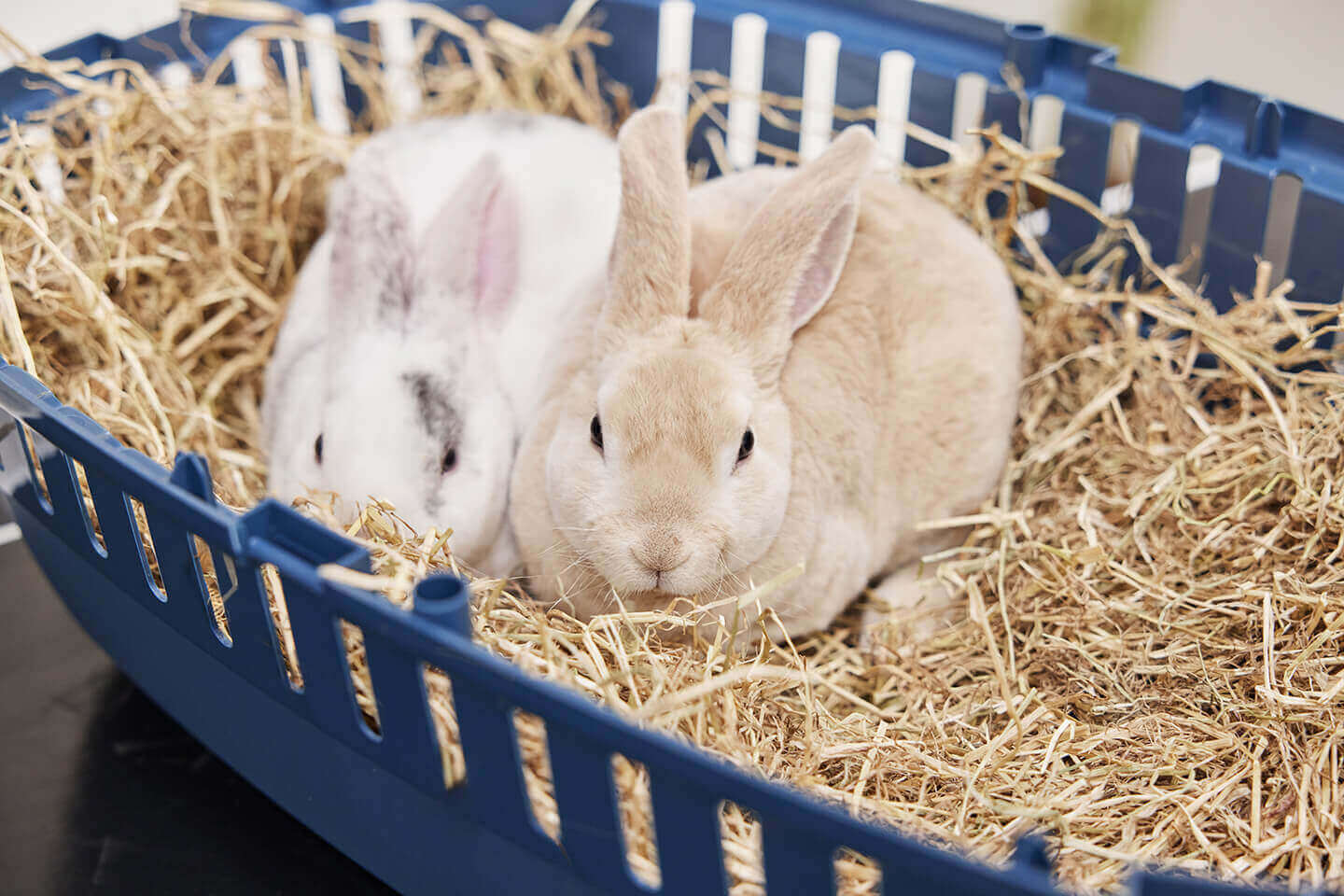
Rabbits are resilient animals, but they still need extra care and protection during colder weather. While they naturally grow thicker coats in winter, providing a warm and dry environment is essential to keeping them comfortable and healthy.
This guide offers practical tips for maintaining your rabbits’ warmth, recognising signs they might be too cold, and ensuring their environment is safe and cosy. Whether your rabbits live indoors or outdoors, these simple steps will help them thrive during the chilly months. Let’s explore how to keep your rabbits snug and happy this winter!
In winter, rabbits grow a thick winter coat and can cope with much lower temperatures, if they have somewhere dry and warm to shelter. Rabbits can tolerate cold temperatures as long as they become used to them gradually. In the wild, they stay in their underground warrens where the temperature stays around 10C in the coldest weather.
If a sudden cold snap follows a period of milder weather, then your rabbits will not have had time to get a thicker coat and you may have to consider temporarily bringing them indoors or making their outdoor shelter warmer if they look cold.
In extremely cold weather, outdoor rabbits would be better somewhere warmer, maybe a shed, an unused garage or indoors.
Explore our range of Rabbit Hutches, Cages & Runs to find the perfect solution for your furry friend's home.
There are many things that you can do to keep your rabbits more comfortable when temperatures drop at night or during colder months. The best way to keep both indoor and outdoor rabbits warm is to put plenty of extra, dry bedding material in their sleeping and sheltering areas for them to burrow into.
For outdoor rabbits, make sure that their hutch is sheltered, out of the direct wind and rain and covered. For milder weather, a hutch cover should do the trick, for lower temperatures, you can insulate your rabbits hutch with layers of blankets and then top with a tarpaulin. Tarpaulin’s can also be used to cover part of the run attached to the hutch to give a dry area for grazing, without reducing ventilation and light. It is important to make sure that any covers on enclosures do not restrict ventilation.
Explore our range of Rabbit Hutch Covers, offering various options to suit your rabbit's needs.
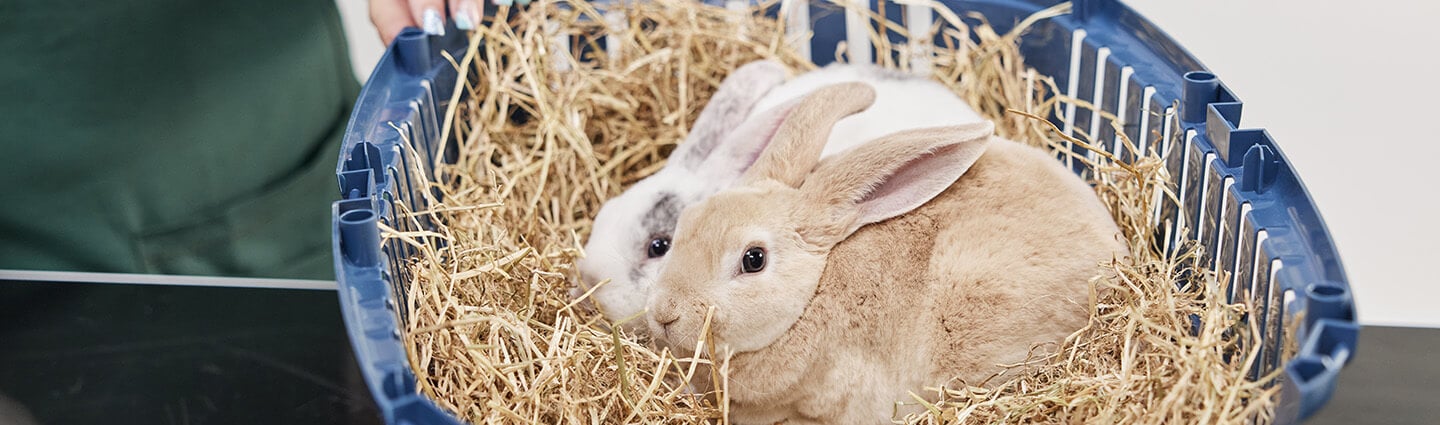
Much like people, chilly rabbits will shiver, rabbits that are too cold will not. If your rabbits have cold ears and noses and are not moving about or interacting as much as normal, then they are likely to be too cold and should be warmed straight away.
Rabbits need checking several times daily in cold weather to ensure that they are comfortable, eating and drinking normally and staying active, and that they are dry. If they are wet, then they need to be dried off and moved to a drier sheltered area immediately. They may need to remain indoors temporarily or under extra shelter while the weather is bad.
Taking cold rabbits into a warmer place, then sitting them on warm towels or well covered heat pads will allow them to warm up slowly. If they do not pick up quickly, then contact your vet.
Rabbits develop hypothermia if they get too cold. Hypothermia develops quickly, especially if a rabbit is wet, and needs to be spotted and treated fast. It can prove fatal in hours if not caught in time.
Rabbits do not hibernate; they stay active all year round. If in cold weather, your rabbits are sleepier than normal, not moving around as much or eating, drinking and toileting less, then they may be ill, and you should call your vet as soon as possible.
Not necessarily, if your rabbit is used to living outside, it is best to leave them in the environment that they are used to, if it is safe to do so. However, if an extreme winter is forecast, or your rabbits are elderly or have an ongoing health condition, then it may be best to either move the rabbits into a shed, empty garage or indoors temporarily.