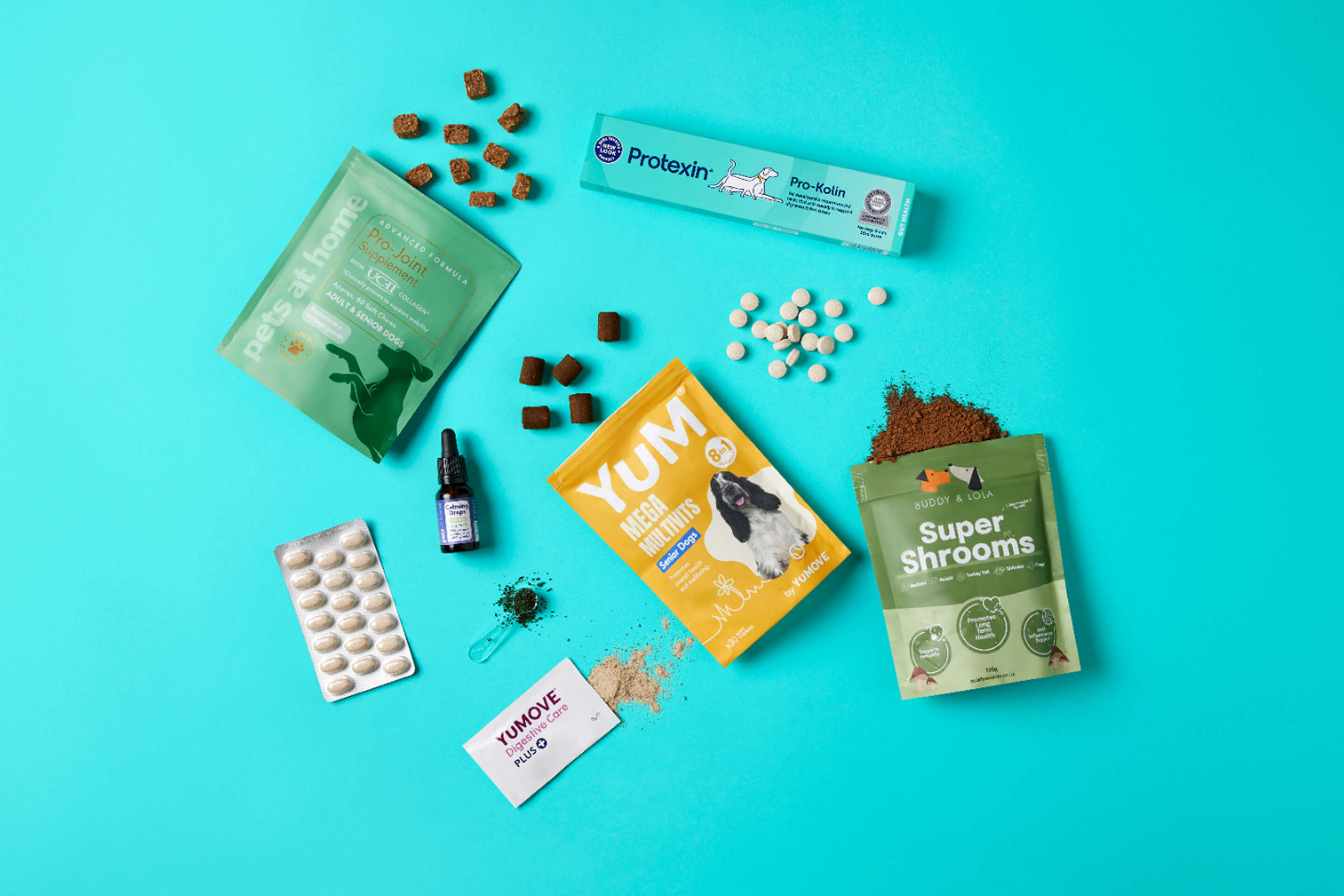
Supplements are in the spotlight! They’re helpful little additions like vitamins, which add nutrients to your pet’s diet. Chews, powders and broths can deliver targeted support for digestion and joints.
It may seem like pampered-paws territory, but supplements may help support your pet’s health.
A helping paw
To learn more about pet supplements, check out this short video.
By
Pets
Diet is often the real star of gut health. Every ingredient your pet eats feeds not just them, but their digestive tract.
Prebiotic fibres like pumpkin, quality proteins and natural antioxidants may help keep the gut balanced.
Most commercially available diets for dogs and cats are balanced, meaning they have all the nutrients that the pet requires. So supplements are not always needed. But if they do need a helping paw, it’s worth discussing some of the following with your vet.
Modern supplements make things easy. Chewables look like treats, powders mix into food, and liquids vanish into the water bowl. Ideal for pets who can sniff out a tablet at fifty paces.
Probiotics and prebiotics are popular for a reason: a settled gut helps to support overall wellness. By supporting immunity, and skin, these supplements can work far beyond the stomach. Helpful strains such as Lactobacillus, Bifidobacterium and Bacillus coagulans may help keep the internal ecosystem in balance.
Omega-3s (EPA & DHA) maintain the health of skin, coat and joints.
Coconut oil, used sparingly, can help moisturise paws or freshen breath.
Pumpkin, parsley and goat milk can gently support digestion.
Kelp powders are sometimes added to support dental hygiene as part of a wider routine.
Bone broths and food toppers offer a simple way to give your pet’s meals a little lift.
Broths can support the health of joints and guts, making them a comforting addition for many pets.
Toppers layer on extra taste and variety, helping transform their meal into something worth a tail wag. But bear in mind that toppers are additional calories on top of your pet’s normal food ration. So you’ll need to adjust their main diet to accommodate for this.
Not every pet does: a complete, balanced diet covers everything most healthy dogs need. Supplements may help pets, but they’re not designed to treat specific health concerns. They’re just a way to support their ongoing health. Always speak to your vet for advice before trying any new supplements. They’ll be able to let you know whether one is needed, and guide you towards the best product.