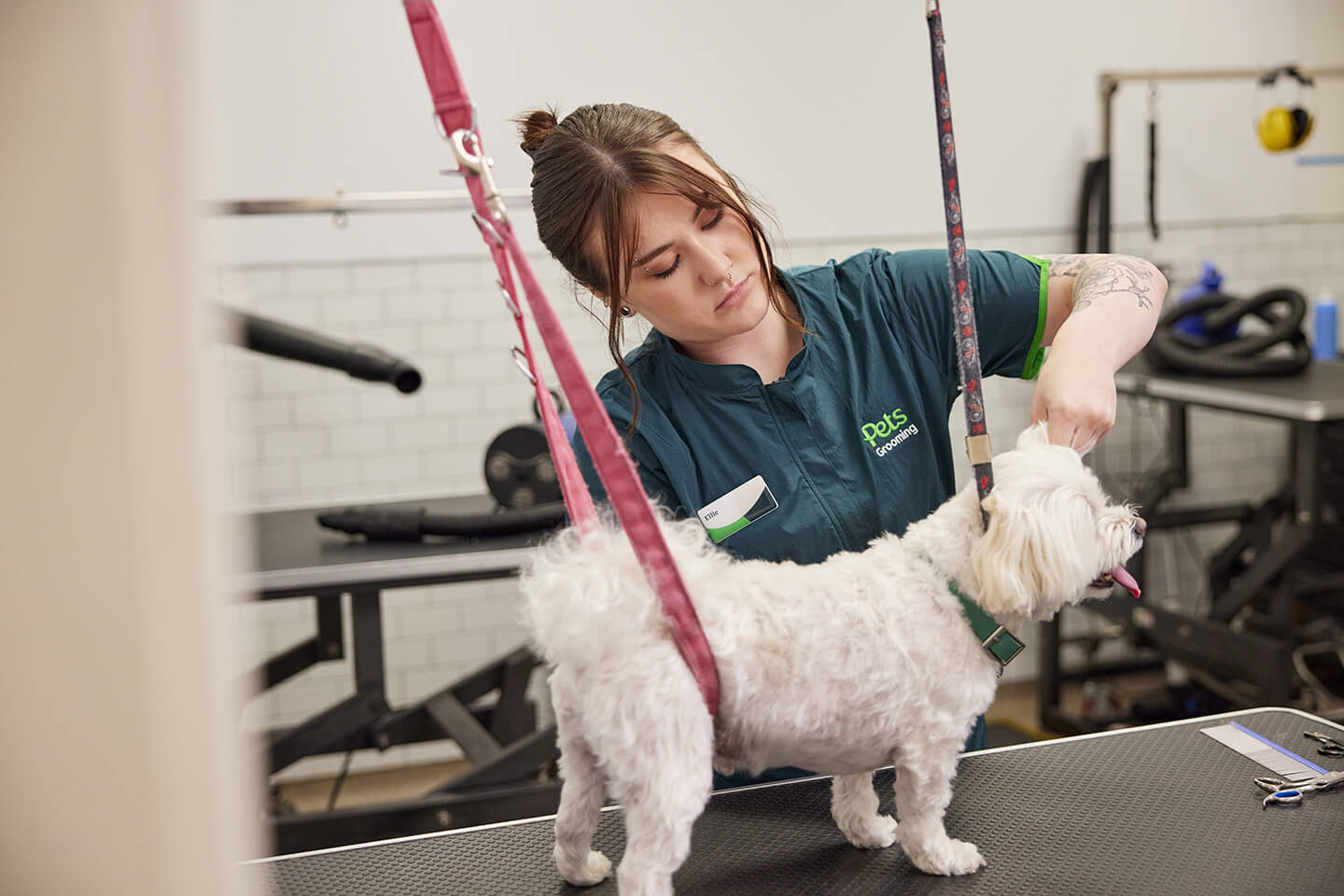
Coat care for your dog is important all year round to keep the coat and skin in tip-top condition. As the seasons change, the purpose of the coat changes, but does that mean you have to look after the coat differently too?
In hot weather, dogs mainly lose excess body heat by panting. A dog's coat is designed to allow heat loss from the skin into the air moving through the coat. It also protects the skin against sunburn.
If your dog is not a breed that needs regular trimming, then clipping their coat in the summer is not advised. They will lose that sun protection and the clip can cause damage to the fur and skin.
Grooming your dog to remove any dead hair will help the coat to work properly and allow air to flow between the hairs, helping the dog to keep cool. Double coated dogs, such as Huskies and Malamutes will need brushing to remove excess undercoat and prevent overheating.
Professional grooming in the summer will ensure the correct groom for your dog according to their breed and coat type. The groomers will also trim the paws, increasing heat loss through the feet, while reducing the likelihood of matt formation or grass seeds or other foreign bodies getting caught in the fur.
Fleas or other parasites will be spotted by the groomer, allowing prompt treatment. If there are other health concerns found – such as skin irritations, eye or ear problems, you will be informed so you can contact your vet.
For further advice or to book, contact the Groom Room.
In winter the temperature drops and sends us to the cupboards to bring out the warm winter clothing for the whole family. Most dogs will not need a coat but if your does then check around the neck, under the chest and around the legs to make sure that there are no matts forming under the coat.
Regular brushing needs to be done whatever the season. In the winter, brushing spreads the natural oils onto the hairs, keeping the coat waterproof. The full winter coat can be thick with a dense undercoat and this undercoat will matt easily if not regularly brushed through. Air is trapped between the undercoat hairs to act as insulation for the dog and if the coat is matted or not brushed, the dog loses that insulation layer.
The feet need special attention too – wash salt or grit from the paws after each walk and keep the fur trimmed on the feet to prevent a build-up of salt, ice or snow between the toes. Ring the Groom Room if you want to know more about winter paw care.
Fleas are a year round problem. Central heating and warmer winters allow fleas to survive both indoors and out, so regular checks and treatments are advised.
Most dogs have their second moult in the autumn as they lose the summer coat and develop the thicker winter coat. Brushing at home or regular professional grooming will help to lift all the dead hair and keep the coat in good condition.
In the autumn, the coat provides waterproofing and insulation as the weather gets cooler. Regular brushing spreads the natural oils over the hairs and keeps the waterproofing layer in good order. It also reduces the development of matts forming in the thicker and sometimes longer coat.
If your dog is covered in mud after playing outside, rinse the mud off with warm water, then dry and brush the coat. This will get rid of any debris without losing the natural oils.
If your dog is really grubby and you cannot bathe them at home, why not ring the Groom Room and book a bath, brush and blow dry.
Most dogs shed hair all year, but many have a full moult in the Spring as they lose their winter coat. All dogs, regardless of coat type, will benefit from being brushed to help lift the loose hair away. In long-coated dogs, brushing will reduce matt formation and in double coated breeds, it can prevent compaction of the undercoat during moulting. It will also greatly reduce the amount of hair all around the house.
If your dog has been out in an April shower and has come home wet, dry the coat initially with a towel. Then fully dry the coat with a dryer on a low heat setting and finally brush the coat out. This will prevent bacterial growth on the damp fur and skin, keep skin health good and avoid that damp dog smell.
Brushing and checking your dog's coat regularly during the Spring will help you to spot any fleas or ticks that your dog may pick up. If you need flea and tick treatment, ask our colleagues in store for advice on the most suitable product.
For information on a full groom to remove undercoat contact the Groom Room.
Dogs should only be bathed if they need it. Bathing too much will strip the natural oils from the coat and skin, removing waterproofing and drying the coat and skin surface. The coat can become dull and dry, and the skin may become itchy.
In hot weather if your dog needs a bath, use warm water, not hot and towel them off before letting them dry naturally.
If you are bathing your dog to cool them down, just use cool, not cold water to wet the coat or sit the dog on a wet towel. Do not wrap them in a towel as this can make them hotter.
If your dog is of a breed that is regularly clipped, then just keep them clipped as normal. Freshly clipped dogs with a sparser hair covering over the back should be monitored for sunburn – older dogs or dogs with hormonal problems can get very thin coated, so keeping them indoors during the sunniest parts of the day can help. UV protection coats are also available for thin coated dogs in the summer, so ask in store for details.
Dogs that are not routinely clipped, such as Labradors or German Shepherds, should not be clipped. Cutting their coats does not make the dog cooler as their coats are designed to keep the dog cooler in hot weather. Regular brushing will keep the coat in the best condition for heat loss. Double coated dogs can overheat, but clipping can cause coat and skin problems, so having the undercoat removed by brushing or by professional groomers is the best way of keeping them cooler.
For more advice on whether your dog should be clipped, contact the Groom Room team.
If your dog is of a breed or coat type that is regularly clipped, such as a Bichon Frise or Poodle, then clipping can continue over the winter as it does through the year. A shorter coat is easier to keep clean in the winter and is less likely to matt and cause irritation where the edges of the coats sit. It is easier to rinse off and dry if your dog gets very muddy and will bring less mud back into the house.
A longer coated breed that is styled in the summer, such as a Spaniel or Retriever, may have a slightly different style in the winter, with shorter feathers and belly and clipped paws, to trap less dirt, but slightly longer over the body for added heat retention.
Dogs that are not normally clipped should not be shaved in the winter as this removes the insulation and waterproofing provided by the coat. Even short coats trap some air for insulation, while double coats and longer coats work best when regularly brushed out. Whatever your dog’s coat type or length, a good grooming routine is essential through the winter.
Itchy skin can be caused by a variety of infections, allergies, and conditions. To ease their discomfort, consider a cool (not cold) bath. Treatments from your vet are the most effective at reducing itchiness, and figuring out the cause will help minimise the risk of exposure in the future. Do not apply salves or creams at home unless directed by your vet, as some human medications can be toxic or cause further irritation.