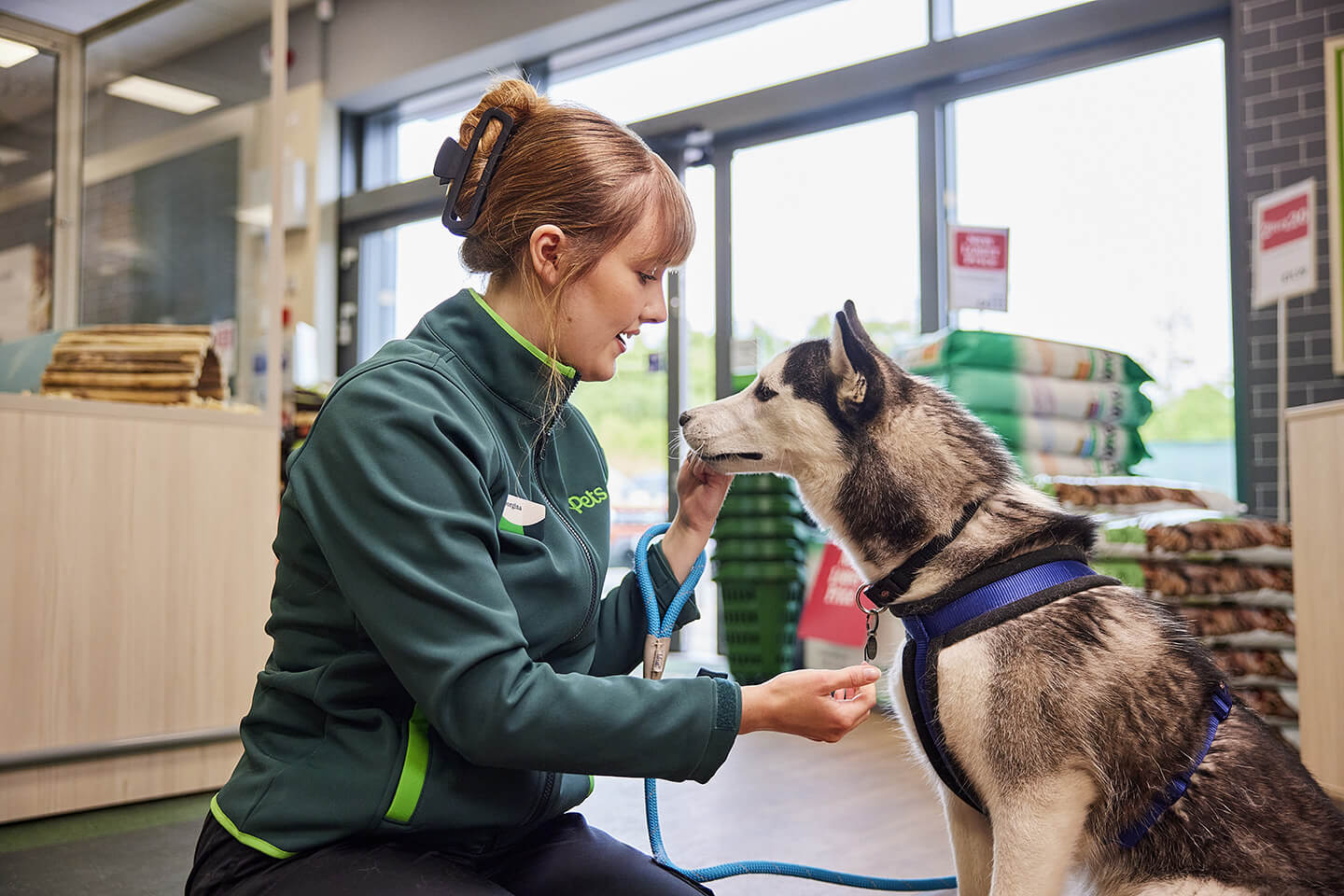
A reactive dog shows an emotional response that is out of proportion with the situation. So, your dog is on leash and sees another dog – they immediately stiffen up, pull on the leash, hackles up and barking at the other dog. You pull back on the leash and tell your dog off, this increases the emotion, and your dog loses control and is now really growling and lunging at the other dog.
There are two main reasons for reactivity – fear and frustration. The signs are very similar for both emotions, but your dog has found themself in an uncomfortable situation and is using the only way they can think of to get out of it. A fearful reactive dog is trying to bluff their way out of a threatening situation, while a frustrated reactive dog is desperate to socialise and will try anything to get to the other dog. Reactive dogs can become aggressive if they cross the threshold into anger and hostility.
Training using positive reinforcement can be used, but you must be able to recognise the subtle changes in your dog’s behaviour to apply the training while your dog is still responsive. Working with a behaviourist will help you understand why your dog is reacting in that way and how to train them to help reduce the reactivity.
Aggression is the intention to do harm to another living thing. The actions of an aggressive dog can look the same as those of the reactive dog, but the intent is different. Any signs of aggression in a dog needs to be taken seriously and working with a behaviourist is advised as aggression can escalate if not handled correctly.
Aggression can either be a reaction to a threat or to frustration. The threat may be to itself (another dog) or removal of something or one that is highly valued (food, toy etc). Frustration can be the perception of something/body stopping the dog doing what it really wants to.
Resource guarding is a common problem in dogs. Whether it be food or a favourite toy, or even the owner (the dog that will bite anyone wanting to join their owner on the sofa, say), the dog is worried that their prize possession is going to be taken away from them.
Food aggression is when you are unable to take food from your dog without triggering an aggressive response. You need to teach your dog that they can trust you not to take their food (without leaving something nicer). While your dog is eating walk as near as you can without them reacting to you and drop one of their favourite treats on the floor as you walk past. Your dog will leave their food, eat the treat and go back to the food.
They will start to associate you near them while eating as a positive experience. Gradually walk closer each mealtime and drop a treat while you walk past. If you do not trigger an aggressive response, continue to narrow the gap over the next few days, then try to drop a treat into the bowl. Once they accept that with no reaction, put down an empty bowl at feeding time, then drop a handful of food into it. Your dog will now understand that only good things happen when you approach their bowl.
Monitor your dogs body language at all times. If any changes are seen that indicate aggression, stop the interaction.
If your dog is very aggressive and lunges at you to protect their food, then contact a behaviourist to work with you.
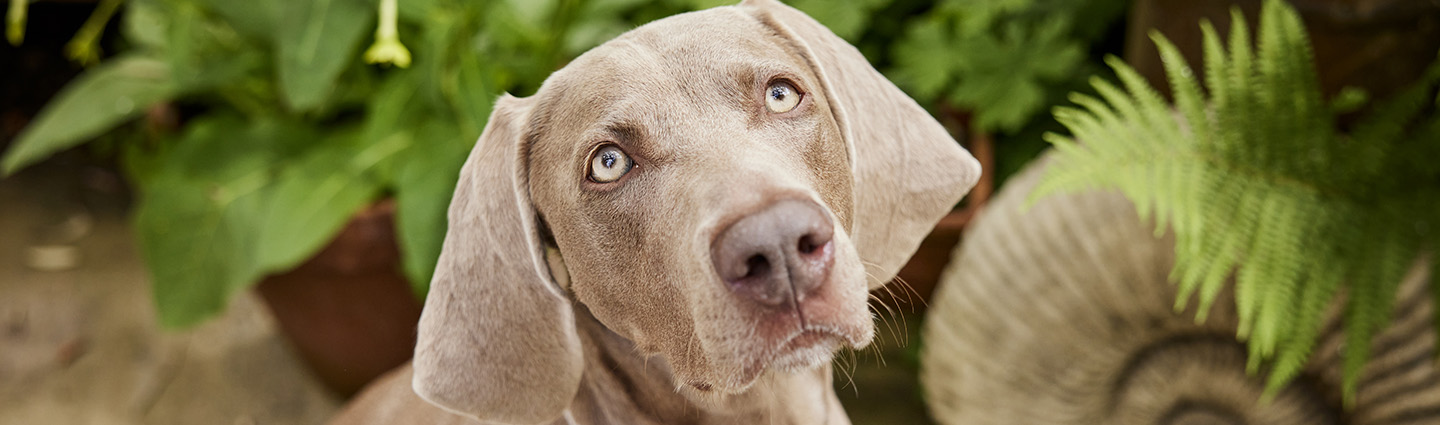
Aggression in dogs is a serious problem, with complex emotional causes, and trying to manage it yourself can often make matters worse. It is best to work with a professional behaviourist, so that they can work out the emotions behind the aggression – as different reasons and different dogs need managing in different ways. The behaviourist can then teach you the best way to manage the aggression and help your dog to be more comfortable in their world.
Punishing a dog for aggression will just increase the degree of emotion present and make matters worse, and real care is needed while training to avoid triggering an aggressive response.
Aggression can also be a sign of underlying disease and discomfort, so a vet check is always warranted. Once illness is ruled out, the behaviourist can start teaching you how to work with your dog. Aggression does progress as time goes on, so the earlier behavioural therapy can be started the better.
There is no such thing as an aggressive dog breed. All dogs are capable of aggression if provoked. Reactivity levels may differ across the breeds, but every individual dog is different, and reactivity and aggression will vary in every animal.
The guarding and fighting breeds have been bred to show aggression in certain situations, but if not exposed, or trained in those situations, will not show more aggression than other breeds. They do, however have other compounding traits, such as body size and strength, jaw musculature (power of the bite), holding when biting and continuity of attack instead of one bite and run. These mean that if an individual was triggered into aggression, the consequences could be much more severe than from an angry terrier, for example.
Nature versus nurture: the rearing and early training of any dog is the main determinant of aggression in that dog. A huge, very strong, fighting breed, if brought up correctly, with lots of socialisation with people and animals, trained using positive reinforcement and no punishment, exercised adequately and given lots of enrichment activities will be much less likely to show aggression than an untrained lap dog that is bored, not exercised or socialised.
A sudden change in behaviour involving aggression is a real cause for concern. Try and work out if there was a specific incident or time when the aggression started, to see if there could be a loss of trust in you or if there was an incident that meant your dog became fearful. Consider when the episodes happen – is there a common trigger, any relation to daily events or other pattern.
If there was nothing obvious at the time, then a health check by a vet is advised. Montior your dog carefully for any other signs; increased drinking, changed toileting or mobility, change of stance, or other odd behaviours such as head-pressing, sleeping in different places or pacing etc. If your dog is doing something strange, video it so that your vet can see exactly what is happening.
There are lots of medical and physical conditions that can cause changes in behaviour: hypothyroidism, low blood sugar, types of epilepsy, tumours, and pain are some of the most common. Anything that makes your dog feel vulnerable can trigger them to defend themselves aggressively. If a health check comes back as clear, including blood tests, then speaking to a behaviourist is the next step.
If you are faced with a dog that is becoming aggressive, stop what you are doing. Stand still and cross your arms over your chest to protect your hands and lower arms. Movement towards the dog is seen as confrontational so do not approach. Do not try and run away as this will trigger a chase and catch reaction, and dogs invariably run quicker than people.
Speak calmly to the dog in a reassuring voice, do not shout or scream as this will increase the aggression. Try and adjust the angle of your body and head so you are not standing square to the dog, try and angle around a little to one side – this removes direct confrontation. If you can move slowly to get something between you and the dog – a piece of street furniture if you are outside or a piece of furniture or a cushion if you are indoors. Do not look the dog directly in the face, direct eye contact is aggressive, and you will be perceived as a threat, so look at the chest or shoulder so you can see any relaxation in the dog's position.
As soon as the dog relaxes a little, try and back slowly away – if you are indoors, try and get out of the room, if outdoors, try and get to a place of safety. If you can call out to somebody for help, try and do so in a calm voice to avoid triggering the dog again.
As soon as you are in a safe place, call for assistance – if it is not your dog, then ring the police and give them as many details as possible about where the incident occurred and a description of the dog. If it is your dog, ring your vet if the behaviour is completely out of context, a behaviourist if you are already working with one or the police if your dog is known to have aggressive tendencies and you feel that you cannot trust them anymore.