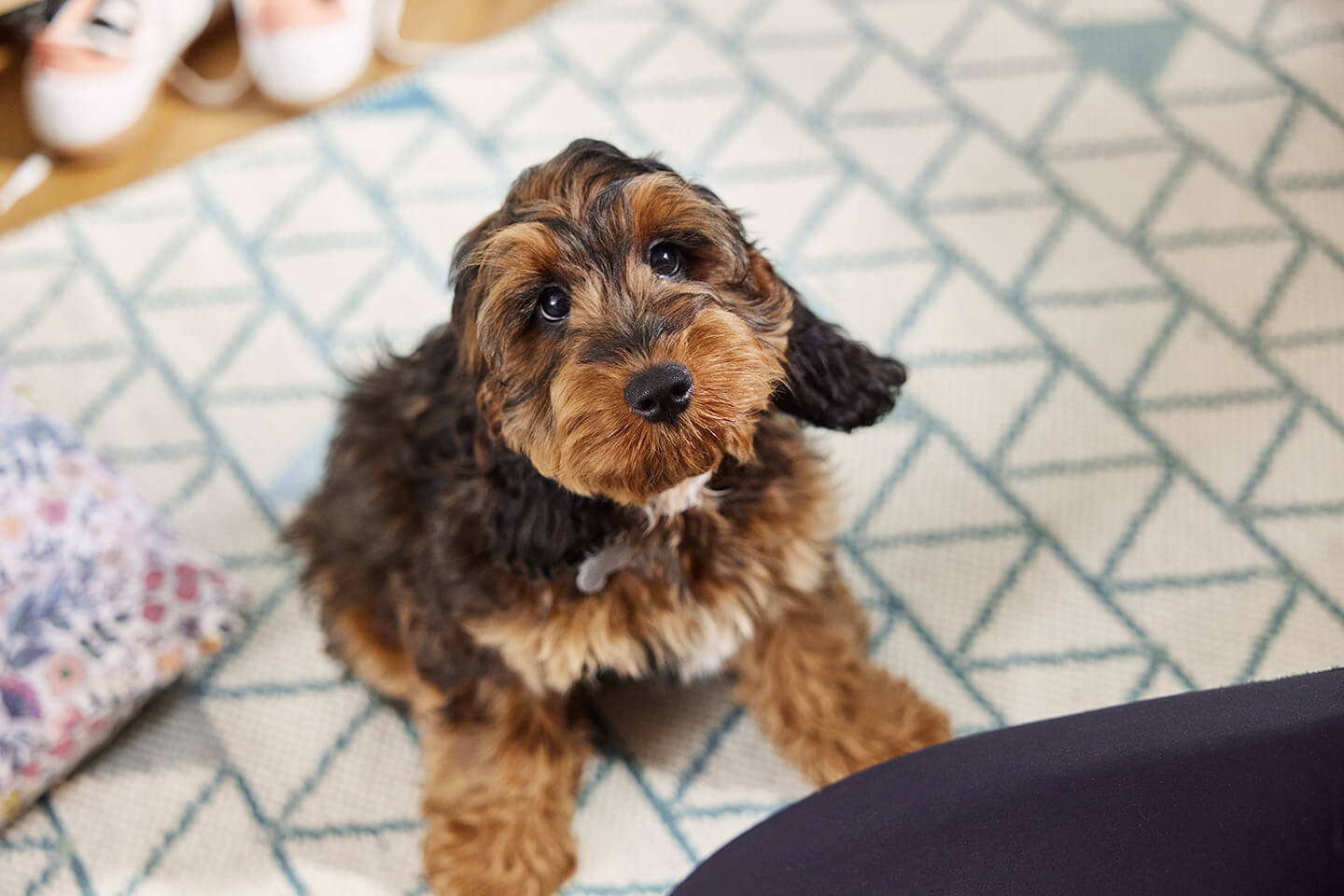
The first days, weeks, and even months of owning a new puppy are so exciting, it’s easy to fall in love with their mannerisms and endless energy. Eventually, you might run into the seemingly endless chewing stage, or overexcited barking and howling, or even relentless pulling on the lead during your first walks. Although these are manageable when your puppy is still small, it’s important to nip these behaviours in the bud. Here are some pointers on some of the most common questions about puppy behaviour.
Puppies have sharp little teeth and although it’s sweet then they’re small, this is a behaviour that can become difficult to manage once they’re bigger. Try to train your puppy out of this behaviour as soon as possible to prevent it turning into a habit or aggressive behaviour.
In general, puppies will bite due to playfulness, because of teething, or due to fear. One of the easiest ways to tell if your puppy is biting you playfully or aggressively is to consider the situation in which your pup has bitten you. If you’re playing with your pet and they seem to be enjoying it, you can assume that any biting is, to them, a part of a game. You can discourage this by yelping whenever biting happens and stopping playing immediately. This will teach them that nipping means attention time is over! Only reengage with them when they are calm and quiet.
If you think your puppy is biting because of fear or stress, consider their surrounding situation. Are they trapped in a corner or surrounded by people? Are they being bothered by children or in a particularly noisy and chaotic environment?
Ensure that your puppy gets enough exercise and attention, as this is one of the best ways to reduce the likelihood of them chewing excessively.
You may notice that your puppy is chewing, which then progresses to biting, and this may be because of teething, exploration, or overexcitement.
Chewing on different objects is a key part of a puppy's development that helps them learn more about the world around them by how things feel and taste. When bored, they may also start chewing as a way of entertainment. Puppies can also start chewing during their early months because they’re experiencing teething. So how do we stop a puppy chewing?
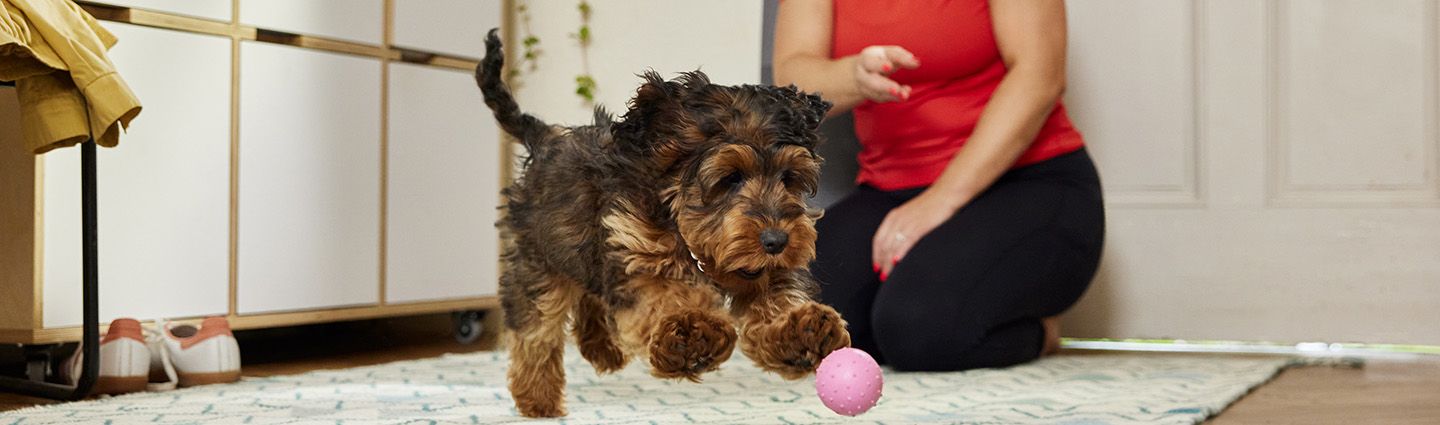
Puppies start teething around 3 weeks of age and lasts for 6 to 8 months as their teeth start to come through. Teething starts with the incisors, then the canines, and lastly the premolars and molars. As the teething process is painful, your pup may seek relief by chewing all sorts around the house. Redirect their behaviour to appropriate chew toys with a variety of textures to choose from. Scenting their toys with food can help keep them focused on the toy instead of moving on to furniture or your hands.
Often licking from your puppy is a simple sign of showing affection. This is something their mother will have done while they were small and so it has become associated with comfort and security. Puppies also use their mouths and tongues to explore the world. Sometimes they may lick more if they pick up something tasty.
However, excessive licking can sometimes be a sign of stress, fear, pain, or excessive attention seeking. If this is a problem, try to look at reasons why your dog may be unsettled or consider seeing a vet to assess your puppy's health.
Humping behaviour is a very common and natural behaviour- and not necessarily hormonal or sexual.
Many puppies hump because they are excited, overstimulated, or stressed. Some people perceive humping other animals as a dominance behaviour, however often it may be a way to ‘self soothe’ where they hump what is causing them stress - understanding your dog's body language and interactions can help interpret what they are feeling.
Intact dogs, particularly males, may also do this as a hormonal reaction however there are many other reasons to consider first.
To reduce humping, it is important to have your dog socialised properly from a young age and provide plenty of physical and mental stimulation. Neutering can also be considered if the behaviour is excessive, but it’s important to discuss this option with your vet thoroughly
Your puppy may be chasing their tail out of entertainment or curiosity – they may not realise it’s connected to their body.
Some dogs need a lot of mental stimulation, they may chase their tail excessively as an outlet for boredom. In these circumstances, redirect them to more appropriate behaviours, training and playtime to keep them entertained.
Keep an eye on your puppy to make sure that they haven’t scratched or chewed at their tail during playtime and injured it. Sometimes dogs can chase their back end because of tapeworm or anal gland issues, so if it becomes excessive then contact your vet to rule out anything untoward.
It’s completely natural to find that your puppy is barking or howling as they find their voice, as this is how they communicate with you and other dogs. It’s often a way for your puppy to express excitement for dinner, playtime, or a new friend. Your puppy may be barking because they are afraid or overwhelmed because of a new stimulus. Whining or howling can be a request for food or attention.
Getting to know your puppies needs and training them from early on with positive enforcement is the best way to prevent them from being excessively loud as they grow up. The best way to train your puppy is to first figure out why your puppy is crying or barking.
For puppies who are struggling to cope with being alone, gradually increase the amount of time they are left and make sure they are warm and comfortable in these periods to keep them as settled as possible. Researching good methods for crate training can be useful in the long term. Puppies will cry more at night, so it’s crucial that they’re tired out properly (physically and mentally) in the daytime and crate training can help here.
For puppies that are barking for attention, you can start training early with a command like ‘quiet’. You use this to warn them to not bark, or to quieten them down. Reinforce the command when you’re at home with your pet and they’re being quiet and use a treat to reward them. With time, they’ll associate not barking with the verbal command, and a reward of a tasty treat.
The first few times outside the house after months of living outdoors is super exciting. You’ll probably find that your puppy pulls against the lead with all their might. Training your puppy against this behaviour is a great idea and lets you look forward to your calm, relaxing walks.
If your puppy starts to pull, stop walking and stand still until they calm down and say ‘stop’, ‘heel’, or even ‘sit’. Once they stop and wait, reward them and then continue walking. You must stop every time there’s tension on the lead to teach your puppy that pulling means slower and less exciting walks. Sometimes this requires a lot of patience.
Sometimes puppies can have the opposite reaction to the outside world. It can be incredibly stressful due to the new sights, sounds and smells. They may refuse to walk, sit or lay down, and could even pull back against the lead. Don’t pull your pup behind you as these forces them into uncomfortable situations. Instead, stand still facing the direction you want them to go. Try not to look back at your pet or give them attention until they start walking with you again. Reward them periodically as they are moving to show them, they are being good.
Harnesses and non-pulling head collars can also be considered however they should be used appropriately. Never use choking collars or similar as they can cause a lot of damage to the neck and throat, especially in growing puppies.
Training your puppy from a young age will allow them to find their confidence with behaviours that are appropriate for the situation and prevent any troublesome habits from becoming a problem as they get bigger.
If you haven’t trained dogs before, it may be worth booking your puppy into a training course while they are young. This sets them up for a successful and happy training period moving onwards.
Training isn’t a one and done process, it’s often something that needs to continue lifelong to reinforce habits – it can sometimes even get a bit trickier during adolescence of your puppy. Sometimes they may have responded well but no longer do- don’t be afraid to take a few steps back in training and start over.
You may notice as your puppy grows into a teenager that they stop listening or start developing bad habits. You can manage this with ongoing training, regular socialisation, and physical and mental stimulation.
Training isn’t a one and done process, it’s often something that needs to continue lifelong to reinforce habits. This can sometimes even get a bit trickier during adolescence of your puppy. Sometimes they may have responded well but no longer do. Don’t be afraid to take a few steps back in training and start over.
It's a good idea, if you haven’t trained dogs before, to book your puppy into a training course while they are young. This sets them up for a successful and happy training period moving onwards.
Got a puppy or kitten? Join our Puppy & Kitten Club and enjoy a range of benefits designed to give your new pet the best start. As a member, you’ll receive 10% off your first shop along with a free pack of selected food, plus access to exclusive offers on vets, pet insurance, and grooming services. You’ll also benefit from regular deals on food, treats, and accessories, as well as expert advice to support you every step of the way.