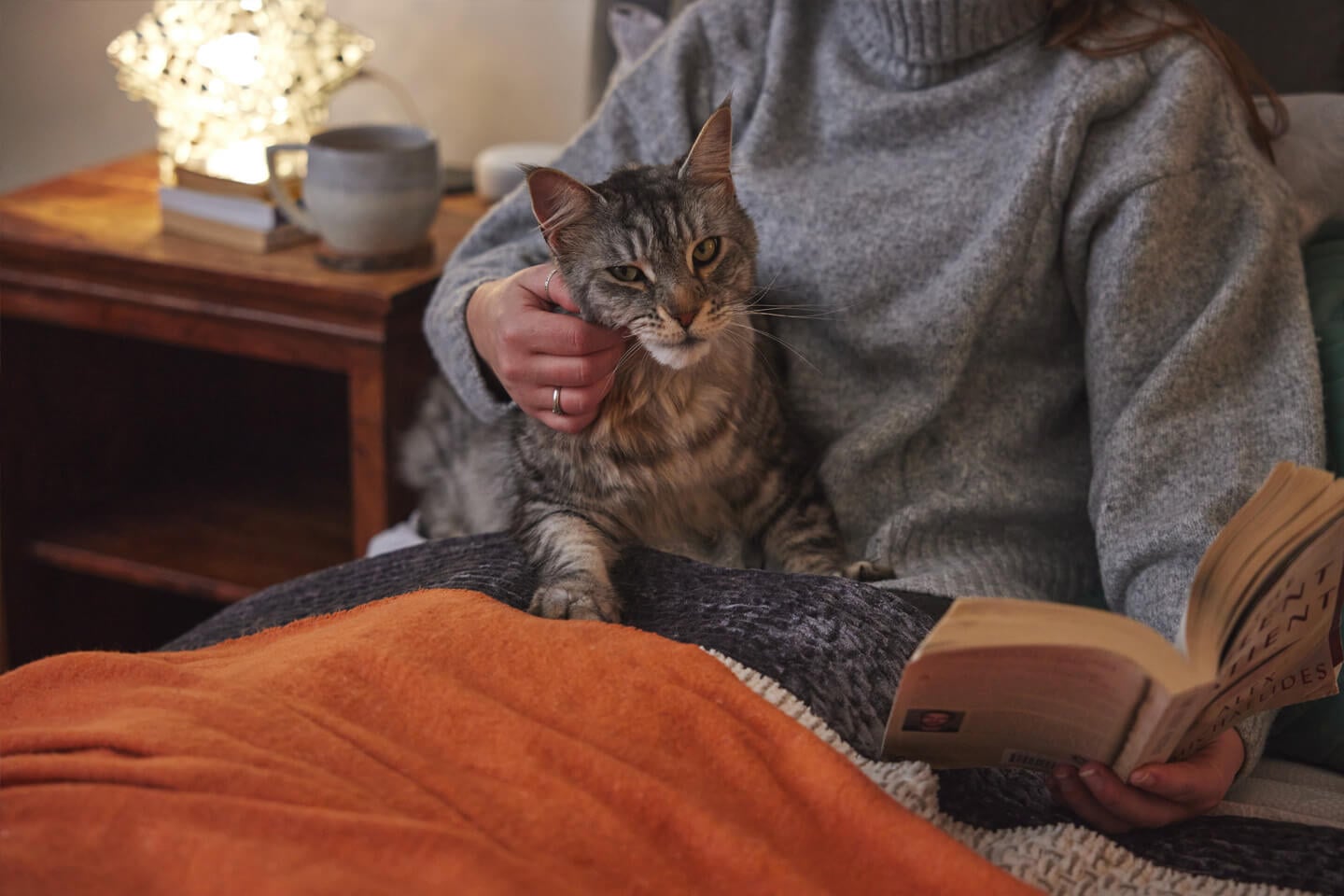
Cats develop a lovely thick winter coat, but even then, they can become chilled in very cold weather. Many cats know to come indoors if they get chilly, but others really want to stay outside, regardless of the temperature.
Preparing for the coldest of days (and nights) inside and outside will help your cats stay warm and comfortable all winter.
If the temperature drops below 7°C, it is considered too cold for cats. If a cat spends a lot of time outside at this temperature, they are at risk of hypothermia. Most cats will stay inside by choice if it gets very cold outside, but if the temperature drops below freezing, then cats should be kept inside as they are at risk of frostbite as well as hypothermia.
Cats are generally good at regulating their body temperature, but they can still feel cold, especially in chilly weather or if they are unwell. Here are some common signs your cat might be feeling the cold:
- Seeking Warm Spots: Your cat may curl up in sunny areas, near radiators, or on blankets and cushions to keep warm.
- Cuddling More: They might seek out your lap or snuggle with other pets for extra body heat.
- Shivering or Trembling: Like humans, cats may shiver or tremble when they are cold as their body works to generate heat.
- Tucked Body Position: Cats may tuck their paws and tail under their body and curl up tightly to conserve heat.
- Cold Ears, Paws, or Nose: Feel their ears, paws, or nose – if they’re unusually cold to the touch, your cat might be chilly.
- Reduced Activity Levels: Cats might become less active when they’re cold, conserving energy to stay warm.
- Changes in Sleeping Habits: They may sleep more and choose warmer, more enclosed spaces than usual.
- Vocalisation: Some cats may meow more or seem unsettled when they’re uncomfortable due to the cold.
- Hiding: Your cat might hide in small, insulated areas such as under blankets, in cupboards, or in cardboard boxes to retain warmth.

- A warm bed - hammock beds that hang on a radiator or an igloo bed that the cat can curl right up in are great for keeping your cat warm on cold days. Find cozy beds for your cat, including self-heating and radiator options, to keep them comfortable all year round: Self Heat Donut Cat Bed and Radiator Cat Bed.
- Encourage Movement: Playing with your cat can help them generate body heat. Use interactive toys to keep them active and warm during the day. Enhance your cat's playtime with engaging toys like the Invisible Flying Mouse 2-in-1 Interactive Cat Toy and the Baby Bea Cardboard Play and Scratch Kitten Toy. These toys are designed to stimulate your cat's natural instincts and provide hours of entertainment.
- Washing their feet - if the roads have been salted, wash your cat’s feet when they come in before they can lick it off themselves. The salt can be irritating and even a small amount ingested can be toxic. The feet can be gently rinsed off or washed with a cat shampoo, then towelled dry. Enhance your cat's grooming and comfort with these products: No Rinse & No Fuss Foam Cat Shampoo for easy cleaning, and the Spotty Cat Blanket – Grey and Luxury Micro Berber Cat Blanket – Cream for added warmth and comfort.
- Use Blankets and Cushions: Add blankets or cushions to their favourite spots to help them retain heat. Make sure the materials are soft, washable, and cat-safe.
- Easy access – if your cat is older and getting a bit stiff, cold weather can make arthritis worse. Check your cat can still easily access their favourite sleeping and resting areas. It is also important they can easily access their food and water bowls and their litter tray. If your cat is struggling, speak to your vet for advice on how to make your cat more comfortable
- Being food aware - cats have a thicker coat during the winter, so you will need to feel your cat to make sure that they are not losing weight. Older cats or those with underlying health conditions need monitoring closely, as they can deteriorate quickly. Equally, younger, fitter cats, who stay indoors tend to gain weight over the winter as activity is reduced and food is readily available. You may need to reduce the treats and change to a lighter food to keep them at a healthy weight
- Safety - a reflective, quick-release collar will make your cat more visible and able to escape should they get caught on anything. Ensure shed and garage doors are shut or wedged open to prevent your cat getting trapped inside. And regularly check cat flaps to make sure they’re not frozen closed or blocked by snow so your cat can’t get back indoors. Ensure your cat's safety and visibility with the Neon Reflective Cat Collar – Yellow. This collar features a reflective design to help you spot your cat in low light conditions. It's adjustable for a comfortable fit and includes a bell for added awareness.
- Cars – always check your car carefully before driving off as your cat may be sheltering inside a wheel arch or near the engine. Clean up any spilt antifreeze as it is very toxic to cats if they lick it off their feet or the floor
- Outdoor resources - if your cat insists on toileting outside, a litter tray with soil in it just outside the door is useful if the ground is frozen solid and more sources of water should be provided as your cat may not be able to drink outside
- Finally, make sure that your cat is microchipped in case they are found hiding somewhere else and pet insurance is advisable as there are more road accidents with cats in the winter.
Many cats will come indoors when the weather is very cold and just go outside for toileting or a quick stroll around their boundaries, before coming back in.
Some cats just do not want to be indoors, so they will need somewhere warm and dry to stay, a source of unfrozen water and extra food to maintain their weight while they burn more energy keeping themselves warm.
If you have a shed or outbuilding that has cat access all the time, you could make up a warm bed in a sheltered corner and have food and water available in there. If not, a large cardboard box with blankets in, wrapped in bin liners to make it waterproof and sited somewhere sheltered in the garden would help.
Cats that are cold will try and get in anywhere they can – so giving them somewhere safe that they can access may stop them getting shut in someone else's shed or garage or climbing into car engine compartments.
Very young kittens will be kept warm by mum and once they are 3 weeks old, kittens can regulate their own temperature and don’t need heat from mum anymore. Kittens that are being hand-reared will need an extra source of heat as mum is not warming them.
A chilled kitten will feel cool to the touch and will be restless and unsettled and will lay still and be less responsive when very cold.
Most cats do not breed in the colder months, but occasionally a winter litter may arrive. In a cold spell, kittens will use a lot of energy keeping themselves warm, so warm bedding and extra food would be needed.
Kittens do not need heat from their mum from around 3 weeks old. They are starting to regulate their body temperature, but in very cold weather, will still need assistance to stop them getting chilled.
It is better to have a warmed area that the kitten can choose to use if it needs to, than for the kitten to get cold.
If your kitten gets too warm and is on a heat pad or water bottle, they will move away from the heat source if they can. There should be enough room in the nesting area for them to get away from the heat if they need to.
If the kitten is too hot, they will start panting and the breathing will be laboured. They will be restless and unable to settle. They should be removed from the extra heat source and placed somewhere cool, then monitored closely to make sure they do not chill.
If you have concerns that your kitten is very hot and they are not recovering when placed somewhere cooler, then contact your vet immediately for further advice.
Newborn kittens will cry if they are getting cold or hungry. You will need to check that they feel warm to the touch and that their tummy is not empty. If they feel cool to the touch, you will need to supply some extra warmth by heating mat or hot water bottle and more bedding.
If your kitten is lying still, cold to the touch and not crying, you need to get them to your vet as soon as possible as they are too cold. Try and transport them either on a heat source or next to your body to warm them up on the way to the vets.