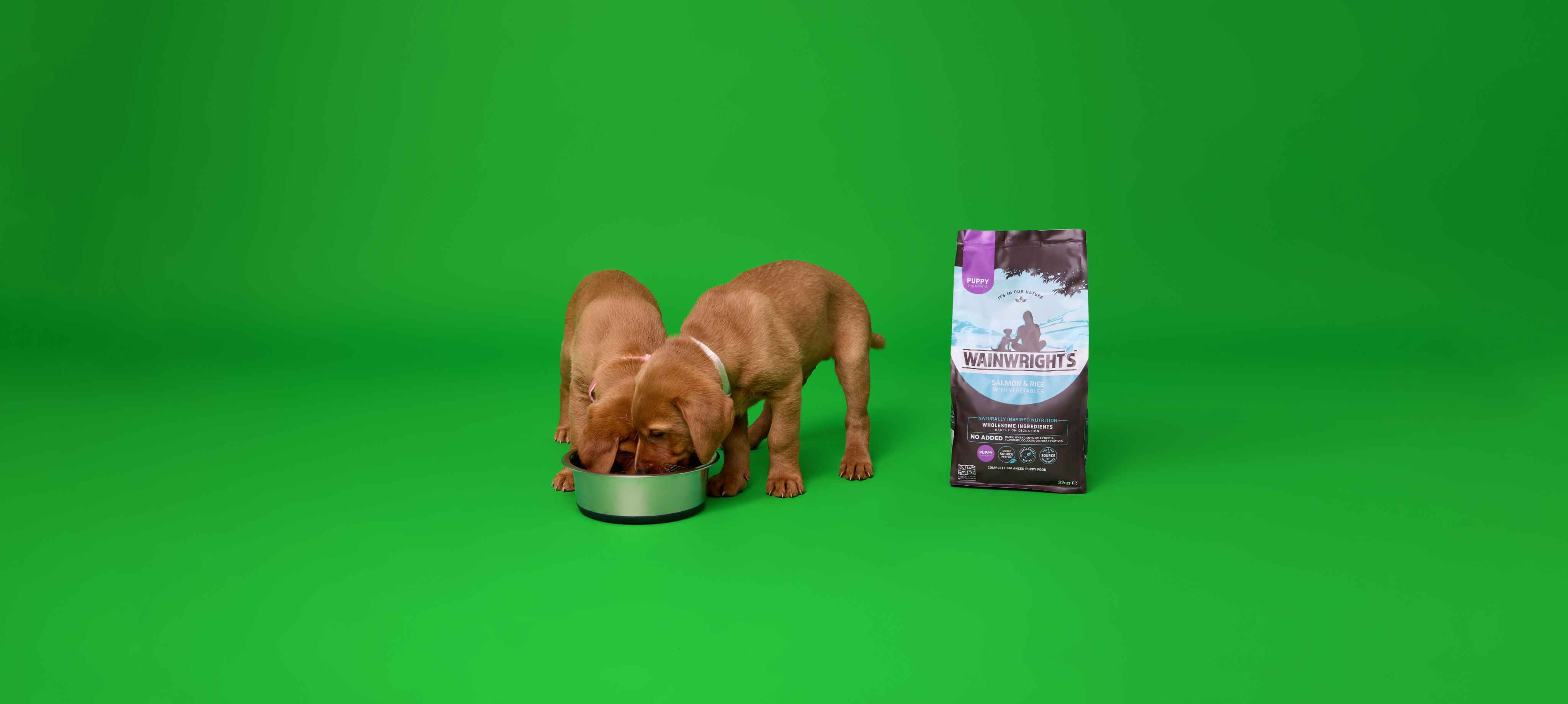
Feeding your puppy
There are so many things to think about when getting a new puppy, it can feel like chasing your tail! So let's look at all the food, bowl, and treat choices, and we'll help you narrow down the best products to suit your pooch.
When you bring your puppy home, you’ll be in major “puppy love” mode. Everything is so new to your pup that it’s best to keep some things the same for now. Continue to use the food that their breeder fed them for a few weeks. This helps settle them and lessens the likelihood of tummy upsets.
When your puppy is better settled and you’re ready to make the switch to your chosen food, do it gradually so their gut has time to adjust. Plus, doing it slowly means you’re more likely to spot intolerances early. A ten-day transition looks something like this:
- Day 1 to 3 - 75% old food and 25% new food.
- Day 4 to 6 - 50% old food and 50% new food.
- Day 7 to 9 - 25% old food and 75% new food.
- Day 10 onwards 100% new food (hurrah!)
Top tip: This smart ten-day method also applies for when you’re thinking about changing from puppy to adult food. This will vary depending on their breed. Small breeds tend to reach adult size relatively early, around 10 – 12 months. For large and giant breeds this can take as long as 18 months. Ask your vet to help you choose the right time to phase in adult dog food.
Puppies have tiny tummies, but big energy needs. Therefore, feeding them little and often is best. Always go off the packet’s daily feeding guide and then split it into the right portion size for their age.
Generally, between eight to twelve weeks, feed your puppy four meals a day. At twelve weeks, you can reduce this to three meals a day. And from six months onwards, you can feed them two meals a day.
Choosing between wet and dry food really comes down to what your puppy likes best, your budget, and what suits your routine.
Wet food has more water, which means it’s softer and easier to chew. But it’s also less energy-dense, so your puppy might need a larger portion of wet food to meet their daily calorie intake.
Dry food has all the nutrients that a growing puppy needs. It’s very easy to store, cheaper, and less messy. You can also mix their dry food with water to soften them for delicate puppy mouths, or during the weaning process.
Yes. Treats are ideal for training and rewarding good behaviour. Just make sure you keep them around 10% of your puppy’s daily food intake, so they don’t get overweight.
Always check the packet for age guidelines and ingredients, plus choose softer treats to protect baby teeth. And if your puppy has a sensitive stomach, it might be best to treat them to gentler, easy-to-chew treats.
When it comes to cow’s milk, just bear in mind that some puppies can’t digest lactose well, causing tummy upsets. Only choose products that are made for puppies. You can explore our range here.
It really depends on your puppy’s age, size, and breed - but regardless, make sure fresh clean water is always available whenever they need it. Water supports their digestion, brain activity, blood flow, breathing and it helps control their body temperature - especially in hot weather when panting increases water loss.
Change their water daily, always remembering to wash their bowl to prevent bacteria from growing. And if you notice any big changes in thirstiness, speak to your vet, or our store colleagues for advice.
Yes. Some human foods can be extremely dangerous and even fatal for both puppies and adult dogs. If you suspect your dog has eaten something risky, contact a vet ASAP.
- Milk can trigger tummy upsets in lactose intolerant dogs.
- Chocolate can be dangerous for the nervous system and heart.
- Grapes and raisins can cause total kidney failure.
- Bones, either raw or cooked, can break teeth and obstruct the gut.
- Macadamia nuts cause weakness and vomiting.
- Green potatoes and tomatoes are toxic due to the solanine content.
- Onions and garlic can damage their red blood cells, leading to anaemia. (Signs include pale gums, weakness, and a rapid heart rate.)
- Xylitol sweetener can cause a severe drop in blood sugar, which can cause them to collapse or have seizures.
We’re barking mad about puppy care, and more than happy to help in store.
We also offer a subscription based food delivery service called Easy Repeat.
Plus, if you’re registered to Vets4Pets, we can support you to plan your puppy’s first year of healthcare.