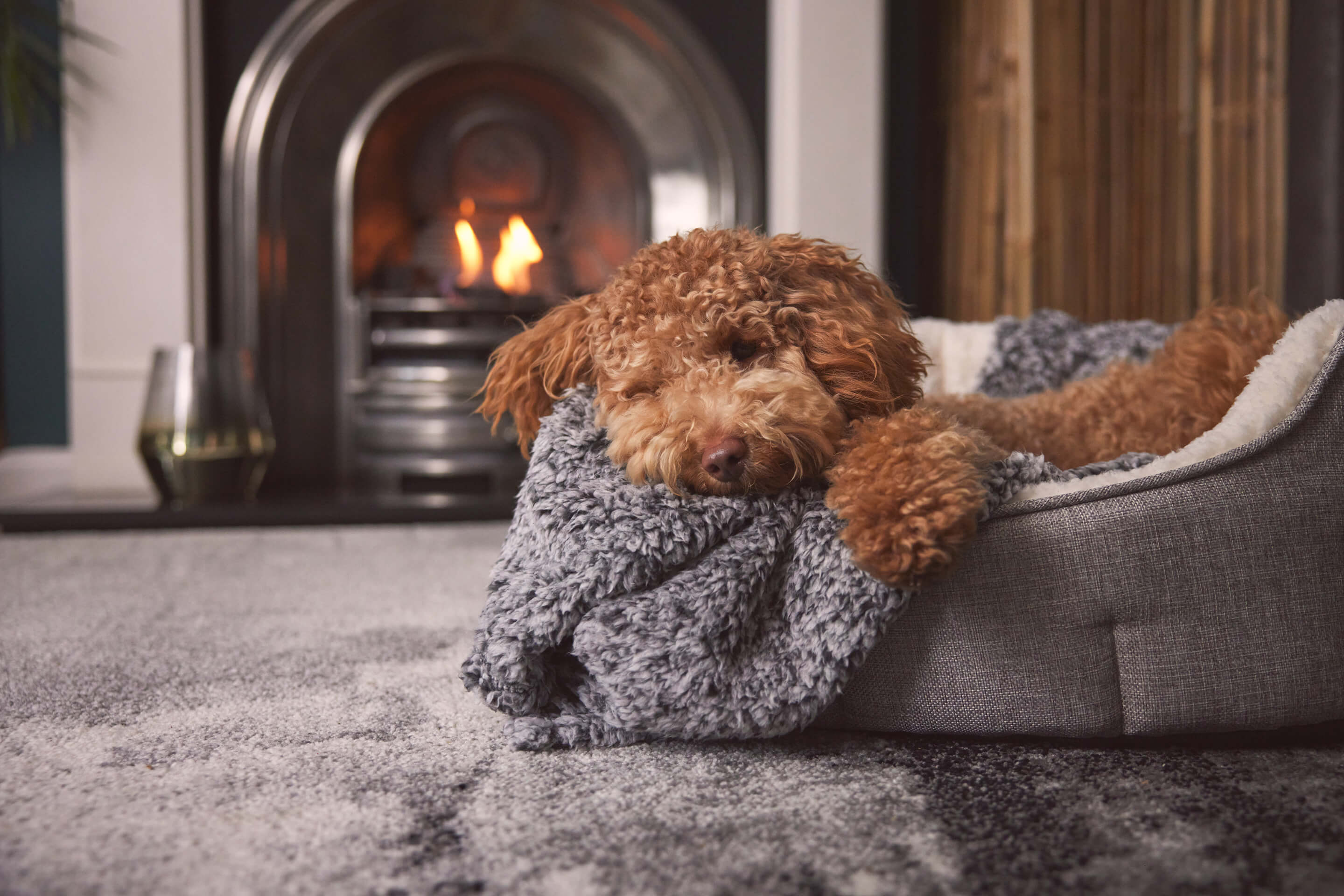
For some dogs, finding calm is as simple as a snooze in a sunny spot. But for others, anxiety is a serious problem. To treat it, it’s important to first understand the causes and severity of their anxiety. If you want your dog to sit, stay and relax, here are five ways to help them regain their calm.
If your dog is chronically anxious, then it’s important that you speak to your vet. Some dogs get very stressed by being left alone, or when they’re being looked after by other people. Others are particularly bothered by noises. Fear of fireworks is a cause for concern, as is severe anxiety around other noises. Some dogs get very dysregulated by a trip to the groomers, or to a place they don’t know.
This anxiety can take many forms. Some common signs of stress are restlessness, frequent panting, excessive barking, and destructive behaviour.
Here’s when you should definitely consult a vet or a trained animal behaviourist:
- Their anxiety is interfering with aspects of their daily life like eating, or is affecting overall wellbeing.
- Their anxiety makes them aggressive or destructive, either to other animals or people, or to themselves (excessive licking or biting).
The vet will be able to carry out an examination, looking for any underlying health conditions or neurological disorders. If they rule these out, they may direct you to an animal behaviourist, who can explore the causes of your dog’s anxiety. They can work through different training methods including desensitisation and positive reinforcement.
There are also some great resources for behaviour issues, including ABTC and ASAB.
If you’re just noticing one-off scenarios of stress or over-excitement, a vet visit may not be necessary. Instead, you can try some of the tips below.
Most dogs find calm in consistency. When meals, walks and bedtime stay on track, it tells them their world is stable, so no need for extra woofs or worry. A comfy safe spot also helps them power down when life gets noisy.
Sniffing games, puzzle toys and gentle training sessions also keep their minds occupied and stop boredom turning into stress. And daily exercise goes a long way to releasing tension.
Teaching calm is all about spotting your dog in their composed moments, and rewarding them for it. Those small rewards build big habits. For dogs who worry about noises, guests or being left alone, gradual exposure helps nudge their nerves back into a comfortable rhythm. Gentle guidance, rather than scolding, keeps stress low and trust high. An animal behaviourist can help with this.
It’s particularly important to expose puppies to a variety of social situations and environments when they are young. This is their socialisation period, and helps decrease the chances of them being afraid as they grow.
Nutrition can have an influence on mood. Omega-3s (EPA and DHA) may help support brain health, while high-quality proteins may stop the dramatic energy highs and lows that can send some dogs into tailspins.
Slow-release carbs like oats or sweet potato can help support steady serotonin levels, providing support for calmer moments.
Ingredients rich in antioxidants, like blueberries, pumpkin and turmeric, may help ease oxidative stress, and are thought to help support a healthy nervous system.
Sometimes the simplest habits create the strongest sense of security. Keeping routines regular, offering a daily walk that lets them properly sniff out the neighbourhood, or giving a calming chew before a stressful moment can all help.
Slow feeders make mealtimes feel less ‘wolf it down’, while pet-safe scents like Adaptil diffusers can help maintain a calmer tone.
Activities like foraging, licking mats and safe chewing satisfy natural instincts and give your dog a chance to decompress.